Monday, October 23, 2017

A Singular Voice: A Roddy McDowall Tribute

And now to take a look at the life and career of one of my favorite actors of all time...


Few things bother me more, when speaking of film and entertainment, than when I bring up a classic actor, and the reaction of most people is to have no idea who that guy is. It's happened with many older actors that I love, including Leslie Nielsen, a legendary comedic actor that you'd think people would know. But perhaps the single most notorious case in my personal experience, is pretty much any time I bring up the actor Roddy McDowall. Most people that I ever mention him to, have either zero idea who he is, or when I try to explain and mention a few of his more famous roles, they go "Oh". And part of the problem, I guess, is that his single most famous role, is one in which his face was completely covered. And many of his best roles, at least in my opinion, were voice roles for animation, as well. Which is why I decided on the title for this article, because like many of the greats, Roddy McDowall had a singular persona, and a singular, very unmistakable voice.

Roderick Andrew Anthony Jude McDowall was born in London, England, on September 17th, 1928. He was primarily of Irish and Scottish decent, a "True Celt" as some might say. His parents were big into the theater, and thus encouraged him to act at a young age. By the the time he was ten years old, he was already receiving film roles. And that is the first thing to note about Mr. McDowall, something that most probably don't know about him (if they know of him at all): the fact that in his youth, he was a fairly big child actor. 


The Pied Piper (1942)


Kidnapped (1948)


His first major film role, after several small ones, was also arguably the biggest of his child career. In 1941, he starred in How Green Was My Valley, the John Ford classic, as the young Huw Morgan. He also starred in the 1942 film The Pied Piper (not actually based on the story, but rather a war-time drama). In 1943, he starred in a pair of animal-based classics,  Lassie Come Home and My Friend Flicka. By 1948, now a young man, he was featuring in the likes of Macbeth as Prince Malcolm, and a starring turn as David Balfour in an adaptation of Kidnapped (pictured above). 

That is perhaps the next notable thing to say about Mr. McDowall, is that he was one of the rare cases, especially back in that "Golden Era" of film, who not only made the successful transition from child actor to adult actor, but actually had a long and prolific career as an adult actor. Hell, he acted for six-plus decades in total, so I'd say he did pretty well for himself. His career in film, television and theater continued on into the 60s, when he featured in the role of Private Morris in the war epic The Longest Day (1962), where he ironically played an American soldier, even though there was a sizeable British cast as well (including Sean Connery).  In 1963 he starred alongside the likes of Elizabeth Taylor, Rex Harrison and Richard Burton in the historical epic Cleopatra, where he played Octavian, the man who would become Augustus Caesar. 


Bedknobs and Broomsticks (1971)

That Darn Cat! (1965)


Now my own personal first exposure to Roddy, was probably the 1971 Disney fantasy film Bedknobs and Broomsticks, which just so happened to be one of my very favorite movies as a child. I mean, what's not to love about a film featuring a traveling magic bed and an enchanted army of empty armor come to life? His role was minor in the film, but notable, as Mr. Rowan Jelk, a local English clergyman, who while seemingly well-meaning, is subtly trying to get in good with Miss Eglantine Price (Angela Lansbury), a single heiress, because he wants to marry her (mainly for her property). He is, of course, unaware that she is a  witch, and later finds this out the hard way, coming calling once more, only to have enchanted boots almost literally run him off. I also probably saw him in That Darn Cat! (1965), a goofball mystery movie, wherein a feisty cat helps to solve a kidnapping. 


Another Childhood Favorite.

And another.


And ANOTHER.


He also had a minor role in another 1970s Disney film that was a childhood favorite of mine, The Cat From Outer Space (1978), a movie about an alien who happens to be a cat, who uses a high-tech collar to telepathically speak to some humans who are trying to help him get back out into space, without getting captured by the military. I also remembered him for his small but memorable part as The March Hare in the 1985 two-part TV adaptation of Alice in Wonderland. He featured alongside Anthony Newley as The Mad Hatter and Arte Johnson as The Dormouse, and they did that scene a fair bit of justice. It's hard to top Ed Wynn and Jerry Colonna in the original 1951 Disney cartoon, but they did "The Mad Tea Party" well nonetheless. 

And of course, I would be absolutely remiss if I didn't mention not only one of my favorite animated films of all time, but one of my personal favorite roles of Mr. Dowall, and that is his turn as the voice of hobbit Samwise Gamgee in Rankin/Bass' follow-up to their incredible The Hobbit (1977) TV movie, 1980s Return of the King.  Starring opposite Orson Bean, as Frodo Baggins, who also did the voice of Bilbo Baggins in the '77 Hobbit (and does Old Bilbo in this), Roddy really kind of steals the show as Sam. Return of the King, the novel, in many ways is Sam's time to shine anyway, as has been poisoned by Shelob, tortured by orcs, and is becoming overwhelmed by The One Ring. And McDowall does absolutely thrive in his lively performance of Sam, in what I would say is the best portrayal of the character (no offense meant to Sean Astin, who also did a great job in Peter Jackson's films). One of my favorite scenes from the movie, a slight embellishment from the novel, is a scene in which Sam is alone, and the Ring gives him a grand vision of himself defeating Sauron and becoming Lord of Mordor, which he transforms into a Eden-like paradise. A really powerful scene, one of many led by McDowall's powerful voice-work. 


The Bookworm


The Mad Hatter


Mr. McDowall also had appearances on many TV shows over the years. He appeared in two Rod Serling shows, both The Twilight Zone and Night Gallery, one episode each, "People Are Alike All Over" (TZ) and "The Cemetery" (NG). He featured in episodes of Mission Impossible, Wonder Woman, and even Quantum Leap. Late in his career, mainly in the 90s, he also got more into voice acting roles for animation, which included voices for cartoons such as Pirates of Dark Water, Pinky and the Brain, The Tick and Gargoyles. Of course, my personal favorite of those, pictured above, was his turn as The Mad Hatter in Batman: The Animated Series (and later an episode of The New Batman Adventures). He had previous history on the OTHER iconic Batman show, the goofy 1960s Adam West show, where he played the villain The Bookworm. But as Dr. Jervis Tetch, a classic Batman villain dating back to 1948, Roddy lent the character both a sympathetic, yet eerie edge. In fact, he did the role so well, that much like many of the OTHER key roles on that cartoon, I can't really imagine the Hatter having any other voice.


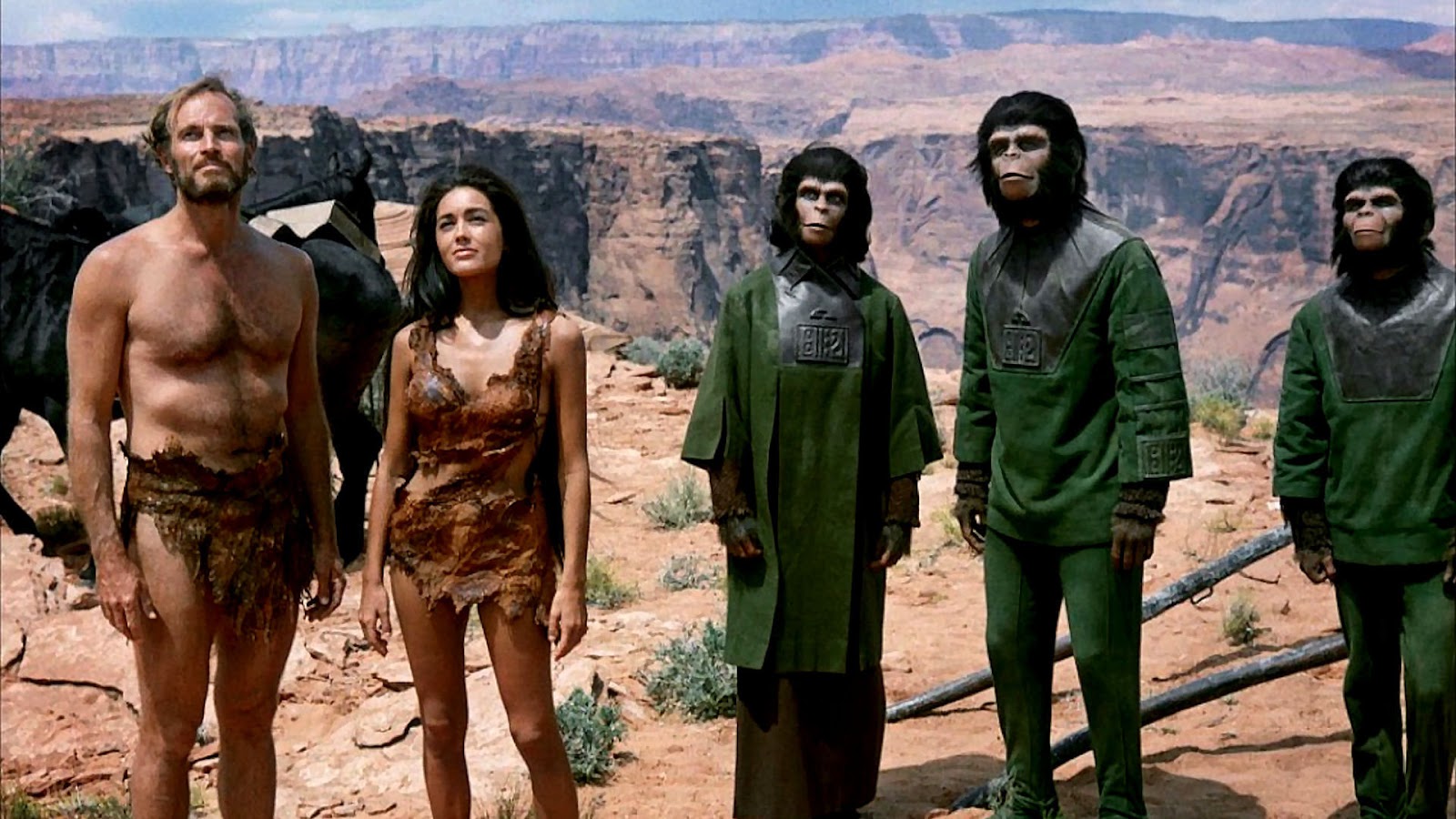
Planet of the Apes (1968)


Doctors Cornelius and Zira

Their son Caesar.


Of course, Roddy McDowall's most FAMOUS role, and one I myself would come to know him for as a child, thanks to a weekend long Apes marathon on TV, was his role under heavy make-up and prosthetics, in the science fiction classic (also co-written by Rod Serling), Planet of the Apes (1968). In the film, he played Dr. Cornelius, a humanoid chimpanzee archaeologist in a far future where apes had somehow evolved into bipedal, speaking civilization, and humans had regressed to non-speaking wildmen. His wife was Dr. Zira, a zoologist specializing in working with "man animals", played wonderfully by actress Kim Hunter. They assist some human astronauts (first Charlton Heston as Taylor and later James Franciscus as Brent) who find themselves time-warped into this future world. Later still, they manage to use one of their repaired spacecraft to escape the destruction of said-world, and time-warp THEMSELVES back to 1970s Earth, to a world ruled by intelligent humans. 


Their ultimate end, shall we say, is less than humane or glorious (which I always hated), but their son is secreted away by a human friend they've made in Armando, and is named Caesar, who is raised in an increasingly dystopian future where apes are made to be a slave-class to humans, which eventually leads to an uprising, etc. All told, McDowall starred in all five Apes films, in three as Cornelius and the final two as his own son Caesar. In fact he was so popular and connected to that series, that he even starred in the short lived (one season) Planet of the Apes TV show (1974), as a completely different ape named Galen. I would say that the Apes films might well have been a success without him, certainly the first. But I think it was McDowall's (again) iconic voice and his incredible presence and persona, that really brought his Ape characters to life, and really helped invest viewers in that world. Even though the original film was starring vehicle for Charlton Heston, and in all fairness he did a great job with it, I think that Roddy easily became the voice and face (prosthetic as it was) of the franchise. I could (and probably will in its own article) argue that the original Apes film never needed any sequels, but I am, on the other hand, happy for Roddy that they were such a success, and such a big part of his career. 


Roddy and the Golem.


Roddy the Psychic


Roddy the Vampire Hunter.


Naturally, it wouldn't be much of a Halloween article, if I didn't bring a bit of spookiness into the deal. And it just so happens that Mr. McDowall also had several roles in a lot of lesser-known horror films during his career, as well. One such role was that of Arthur Pimm in the 1967 British film IT, also known as Curse of the Golem, which borrows heavily for his character from the earlier 60s Hitchcock megahit Psycho (1960). The similarity is that his character, a museum employee, keeps his own mother's dead and rotting corpse in his home, and steals jewelry to put on her, because he's fucking nuts. But the twist is, he comes across a Jewish Golem in the museum, which he learns to control, and sends it out to do his bidding, with expectantly disastrous consequences. He also starred in the 1973 paranormal thriller The Legend of Hell House, where he plays Benjamin Franklin Fischer, one of a pair of psychics brought to Belasco House, the "Mount Everest of Haunted Houses", to conduct paranormal research. The group is tormented and even attacked by the forces of the house, and without spoiling too much, let's just say shit goes sideways. I would recommend the latter, as it is a fairly solid haunted house movie.


My personal favorite of these horror roles, of course, is 1985's Fright Night, in which he plays one of my favorite roles of his, the character of actor Peter Vincent (a send-up to both Peter Cushing and Vincent Price), an old vampire movie star who horror fanatic Charlie tries to gain help from in his quest to fight his next door neighbor. His neighbor, of course, happens to be a vampire, the fiendish Jerry Dandrige (played by Chris Sarandon). It's one of his best roles, and one of the most coolest characters in all of horror-dom, if you ask me, because he starts out as an obvious phony (or at least, just a washed up actor who doesn't have time for crazy fans), but eventually lives his character, being he Van Helsing-like hero that both Charlie believes in, and needs to save his life. 


Laserblast (1978)


The coolest robot this side of Robby.


McDowall also featured in other genre films, such as the highly questionable cult classic with great stop motion effects, 1978's Laserblast (as seen above featured on Mystery Science Theater 3000), as the character Dr. Mellon.  Or another of my personal favorites, and another voice role people are likely unaware of, he provide the voice of the robot V.I.N.C.E.N.T., opposite Slim Pickens as "Old Bob", in the 1979 sci-fi film The Black Hole. That is another film I saw in my childhood, and loved, probably mostly due to the fact that McDowall as the robot is both endearing and funny, in an otherwise very dark and somber (especially for Disney) science fiction story. "Vince" is easily one of the coolest robots in cinema history, which is sad, because again, he is a character from a film few really know about these days (and more should). 


All in all, at least in this man's estimation, Roddy McDowall had a long and very successful career. In fact, his last film role came the same year as his sad death to lung cancer, 1998, where he provided the voice for "Mr. Soil" in the Pixar hit A Bug's Life. Not an amazing role, but also not too shabby a way to "go out", so to speak. Mr. McDowall was an "actor's actor", as the saying goes, reported a consummate gentleman and kind man, and unlike many actors, he had a very long career that saw him in a wide variety of genres, from comedy and drama, to romance and historical epic, to horror and science fiction. He was a huge, iconic part of film history with the Apes series, played some of the best, and most interesting characters I know in film. 

It is my genuine hope, that after reading this article, that you will not only now be more familiar with Roddy McDowall and his work. But that you will also be inspired to go and seek out, and watch some of his work as well, to really enjoy and cherish one of the finer performers this medium of entertainment, in my humble estimation, has ever produced. If I had to give you some top suggestions of McDowall films to see, some of my picks would be:

Bedknobs and Broomsticks (1971)


The Legend of Hell House (1973)

Planet of the Apes (1968)

How Green Was My Valley (1941)

It! (1967)

The Return of the King (1980)


Fright Night (1985)

And because it shouldn't be missed, the Batman Animated Series episodes "Mad As a Hatter", "Perchance to Dream", and "The Worry Men."


If you can only for some reason watch a couple, I would say to make sure you catch Fright Night and Return of the King, and the original Planet of the Apes.  It's the perfect time of year for them, and in my humble opinion, everyone could use a bit more Roddy in their life. Cheers! 


Saturday, September 30, 2017

Unnecessary Sequels: Caravan of Courage

The season is upon us once again, so let's kick the tires and light the fires! Here's a little something out of left field to start you off...


So the last couple entries in this series, have focused on bad or unneeded horror movie sequels.  This time around, I thought I would mix it up, and throw you all a curveball. This particular curveball comes in cute and cuddly form of giant, wild teddy-bear folk. Brace yourselves!


This is what an 80s Childhood looked like.

Film: Caravan of Courage: An Ewok Adventure (originally called "The Ewok Adventure")
Year: 1984
Director: John Korty
Unnecessary Sequels: Ewoks: The Battle for Endor (1985)

As a little kid growing up in the 80s, Star Wars was naturally a huge part of my world. At some early age, I saw the movies on TV, as well as these TV movies, and the cartoons. I was a fan of all of it, and it probably even had at least some small part in shaping who I was as I grew up. When this TV movie originally debuted, near my birthday in fact, on November 25th 1984, if I saw it when it first debuted, I was too young to probably really get much out of it or remember it. Thankfully, they replayed it on TV as I got a bit older, and it became something I loved.

In full disclosure, unlike apparently so many other Star Wars fans, The Empire Strikes Back has never at any point in my life been my favorite. As a kid, my original favorite Star Wars film was Return of the Jedi. When I grew into adulthood, it eventually became the original film, though I still love Jedi. I like Empire, it's a good movie and a great middle part to the original trilogy. It's simply never been my favorite. As a child, there was nothing NOT to love about Jedi though. It had Jaba's Palace, it had speeder bikes, walkers, a gigantic space battle the likes of which nobody had seen at the time, an epic fight between father and son, and of course...Ewoks.

And as a kid, lemme tell ya, I fuckin' loved Ewoks. I loved this TV movie, and while I probably saw and liked the Droids cartoon, I definitely liked and remembered the Ewoks one more. Wicket was the man, and just in general, how could a kid NOT love what were basically giant teddy bears?


Salty Star Wars fans.


Now I'm fully aware of the fact that along with the infamous "hatred" many fans have for the "Prequel Trilogy", that among perhaps older fans back then especially, there were some who also didn't like the existence of adorable and funny Ewoks in THEIR serious Star Wars film. Those people probably didn't like this TV movie either. And while people can like or feel however they wish, I would gently suggest that people who have a problem with a "cute" or funny element being in something they love, might want to grow up ever so slightly.

To me, even as a teen and adult, continued loving the Ewoks. Not as much as I did as a child, surely. But I still like the characters, and like the idea of the race. It's absurd, on it's face, that a race of tiny, cute-as-hell creatures could also be warriors and help turn the tide of battle against a fearsome, nigh unstoppable Galactic Empire. But that's also why it worked so well, and precisely why, in story, they DID help turn the tide. Because no fearsome, unstoppable Empire is going to pay the slightest notice to a "primitive" bunch of teddy bears. Much less think that such harmless creatures could ever pose any kind of meaningful threat to their operations. And it was that arrogance, and the dichotomy of these simplistic, naturalistic little beings with their crude tools and means, against this big hi-tech force, that literally got the logs rolling. In the end, while they did take out some Imperial forces, what the Ewoks accomplished was basically helping to serve as a distraction, while the Rebels destroyed the base and shut down the Death Star's shield generator. But the part they played in taking down the Empire was ultimately huge, because without them providing that distraction, the Rebels would have lost.


Fierce as hell.


So now that I'm done sharing my love for and defense of Ewoks as a thing, let's dig into the actual movie itself! The basic premise, is that these adventures take place between the events of The Empire Strikes Back and Return of the Jedi. And yes, as far as I'm concerned, this movie is canon, salty fans and Disney be damned. The story starts with a couple, Catarine and Jeremitt Towani (played by Irish actress Fionnula Flanagan and actor Guy Boyd), near the wreckage of their crashed starship, looking for their missing children who have wandered off. As they search, a humanoid giant comes stomping out of the forest towards them, probably attracted by the crashing of their ship, and grabs them both, taking them away. The children, Mace and Cindel (played by TV actors Eric Walker and first-time actress Aubree Miller), must eventually have made their way back to the wreckage, as the next morning, a group of Ewoks, Deej and his sons Weechee and Widdle (Wicket's father and older brothers) search the wreck, and find Cindel hiding. After Mace tries to attack them thinking them animals attacking his sister, the Ewoks subdue him and take both human children back to their village.

To make a long story short, once the Ewoks manage to cure Cindel who has become sick, they go to the shaman Logray (featured prominently in Return of the Jedi), who uses a "sight spinner" to see a vision of their parents being held by the great monster that took them: the Gorax. The Gorax lives in a mountain fortress far from the Ewok village, and so Deej and his sons decide to set out with the children to help them find rescue their parents. Before they leave, Logray gives each member of this "Caravan of Courage" a special totem to help them on their way, including two extra that were to be given to new members of the party who must be convinced to join, or else the mission would fail.

Along their perilous journey, they find Chukha-Trok, an unusually large and strong Ewok woodsman, who is eventually convinced to go after bonding over some axe-throwing with the human boy Mace. And later still they find the solitary priestess Kaink, whose magic they desperately need, who is convinced to go after little Cindel impresses her. Thus the titular "Caravan of Courage" was complete!


The awesome stop-motion Boar-Wolf.


Ultimately, this Ewok Adventure is definitely a lighter, more "family" oriented fare. And I'm sure some fans have complained over time that it is too heavily "fairy tale" and "fantasy" oriented. To that, I would say first that Star Wars has always been a marriage of sci-fi action and "fairy tale fantasy", which is part of what makes it so great. And second, that the heavy emphasis on magic in the story fits right in line with how the Ewoks are presented in Jedi, as a very animistic people who are also highly spiritual, using rituals and magic as a regular part of their culture. Besides that, the magic in use, if you really want to bother breaking it down and thinking about it, is at it's core just manifestations of "The Force".

But I would say overall, that Caravan of Courage is a good film. Yes, I am not only nostalgic about it, but I would say that it is, all things considered, especially for a made-for-TV affair from the 80s, a solid family-oriented fantasy film that stands up today. A decent production, a large budget for a TV movie back then, and great effects-work by Industrial Light and Magic. Plus, it's just a fun story. It helps flesh out the Ewoks and their world more, and it doubles as a cool adventure, complete with curses ponds, fearsome beasts, mischievous fairies, giant spiders, and one mean mother of a Gorax. In other words it has everything one could possibly want from a movie.


A portrait of a typical Ewok hater.


So, to lead into the Unnecessary Sequel, it is somewhat necessary for me to first provide some spoilers, for context. The film ends, as seen above, with an epic showdown between the heroes, and that giant Gorax jerk. They manage to free the parents, and the powerful Chukha-Trok buys them some time by trying to trying to fight the monster by himself. In a sad moment for the story, Chukha-Trok is mortally wounded during the encounter, with his new human friend Mace holding him as he dies. He even gives Mace his prized axe.

Afterwards, the fathers are able to use some spider-thread to trip the giant as he rushes down the stairs after them, sending him sailing into the great chasm at the bottom, presumably to his doom. After everyone safely swings across the pit, the movie gives you one last "GOTCHA" moment, as the giant managed to crawl back up the side of the pit, trying to grab at them, but Mace uses Chukha-Trok's axe to deal him a final blow, sending him back down the chasm for good. The group make their way back to the Ewok village, and the family decides to stay while they repair their wrecked spacecraft. And with that, you get a nice, wrapped-up, self-contained, happy ending.


This is canon.


This isn't, Brimley or not.


The success of the TV movie, helped lead into the spin-off Ewoks cartoon series, which debuted along with the aforementioned Droids cartoon in 1985. But that wasn't enough. The network wanted another TV movie, since the first had done so well for them. And here's the thing, I don't have a problem at all with them making a second Ewok film. They and their world are interesting, especially to children, and there were certainly more stories that could be told in that world. My problem lies in the fact that they decided to make the second TV movie a direct sequel to the first. As I've already illustrated, the first movie was a cute, fun and heart-warming, and most importantly self-contained story. It had a happy ending, and we honestly never needed to see the Towani family again, left instead to hope and assume that they fixed their ship, and got off-world, avoiding the dangers of the Galactic Empire. Unfortunately, Lucas and Co had other ideas.

I've read that George Lucas, shortly before sitting down to plan this sequel, had just recently watched the old 1937 Heidi film (starring Shirley Temple), and really liked the idea of incorporating that kind of set-up within this next Ewok story. Which, again, is fine on it's face. Except that they decided to go ahead and do that with the Towani family. Instead of letting them have their "happily ever after", The Battle For Endor begins, especially if you were a kid like me at the time, with the Ewok village being attacked by "Marauders" just as the Towani family are preparing to take their ship and leave. The girl Cindel manages to run away, but her family are gunned down. Talk about completely shattering and shitting on the previous film's ending. That's about on par with the equally fatalistic and crappy opening to Alien 3, in my book (RIP Newt).


Wilford Brimley, being Wilford Brimley.


Cindel and Wicket run into a small, wacky creature called Teek, who takes them to the home of a grumpy old human man who also just so happens to live on Endor, Noa Briqualon (played by Wilford Brimley, in prime Brimley fashion). Enter the Heidi influence, as Noa is at first presented as a Grumpy Gus, who hates kids and just wants to be left alone, immediately telling Cindel and Wicket to leave. But then when they don't go that far away, he secretly gives food to Teek to give to them, showing that he isn't such a bastard after all. And again, all of this, Teek, Noa, the Heidi influence, I'm FINE with that. But they should have left Cindel out of it. Her family should have escaped in their ship BEFORE the raid on Wicket's village, and if you're going to have a human girl, make it an all new one, I say.


This guy...


So the main villain of the story is the dork you see pictured above: Terak. He, along with his shape-shifting sorceress Charal and his army of goons, have apparently also become crash-landed and stranded on Endor (the moon must be bad luck), and apart from attacking and enslaving Ewoks, they want to find parts to get their grouchy asses back out into space, where they can do mean things, even though the REAL bad guys (The Empire) would kick their shit open in a New York Minute.

To do this, they stole the power cell to the Towani family ship, but seem to be morons and don't know how to use it. So they want to get their hands on the 4-year old girl, who they somehow think will be able to teach them how. Meanwhile, it turns out that old Noa, crafty guy that he is, ALSO crash-landed on this planet years ago, and has been fixing up his own starship, which now only (conveniently) needs a new power cell.


"Go-Motion" monsters.


The story itself isn't horrible, and if it had focused more on the Ewoks, and not on a tragic Heidi story that required Cindel's family to be murdered, thus making their valiant rescue and happy reunion from the first movie pointless and obsolete, it would have been ok. Not as good as the first TV movie, but ok. Acceptable. But as is, with the shitty family death setting a bleak and absurd tone, as a kid and now, it just leaves a bad taste in my mouth and makes the movie hard to enjoy.

Like with most Unnecessary Sequels, the movie isn't as good as it's predecessor, and contains elements that actually detract from, and even somewhat "ruin" the original movie, if you choose to not do as I do, and just ignore that this exists. The Ewoks eventually beat Terak, they get the power cell, Noa and Cindel say their goodbyes and he takes her wherever out in the universe, presumably becoming her foster father. But that isn't a terribly happy ending, in contrast to what it cost Cindel, and the erasure of the ACTUALLY happy ending of the first film that it represents. Life doesn't always have happy endings, true. But fairy tales often do, and Caravan of Courage did, and thus it should have remained.


Teek is cool in my book, he gets a pass.


There are some who would argue neither of the TV films ever should have been made, I'm sure. But to me, the first was a really good part of my childhood, something that, along with the theatrical trilogy, I became very attached to. So you can also imagine how 80s me was not only upset, but also a bit traumatized, by this sequel's direction. If it had been it's own separate thing, I likely would have still loved it. But as it is, ill-conceived as I feel it was, it is something I have strongly disliked since I first saw it. There are certainly worse Unnecessary Sequels I have seen (lots). But in some ways, given my attachment to the original TV movie, my dislike of this one is a bit more personal.


And with that, I'll leave it alone. Stay Tuned for more spooky content as we countdown to Halloween!


Thursday, August 31, 2017

Godzilla Chronicles: Ghidorah, The Three-Headed Monster


Finally in our Godzilla Chronicles journey, we come to the first film in the series that I have no childhood history with. Most of the "Showa Era" films I saw as a kid, either buying the tapes at Walmart, or seeing them at some point on TV (such as TNT's MonsterVision). The exceptions to that, were this, Destroy All Monsters, and Godzilla vs. The Smog Monster. These three I would have to wait to see until either my teens, when I would finally manage to rent them, or in the specific case of this film, I'm fairly certain I didn't finally see it until my 20s.

The last Godzilla film we discussed, Mothra vs. Godzilla, came out in Japan in April 1964. In a very quick turn around, this film ALSO came out the same year, in December of 1964. And while both were directed by the always great Ishiro Honda, I have to say, having re-watched this again just recently for this article, this is perhaps his weakest work, from a cinematic standpoint, as a director. The only other Showa G-Film I can really compare it to in that regard, is Godzilla Raids Again. The original film released in Japan in November 1954, and its direct sequel (which Honda did NOT direct), was rushed into production, and reached theaters less than six months later, in April 1955. The difference being, that while that second 50s film was most certainly rushed, in some ways it is still a more coherent, "steady" film than Ghidorah is.


Well EXCUSE me, Princess....


That isn't to say that I don't like the film, I do. In fact I like ALL of the Showa era films on their own merits. It is merely to say that, of all of the Ishiro Honda films I've ever seen, and certainly out of all of the Showa era Godzilla films, this one is the most...shall we say, erratic. There are many times during this film, where there will either be an abrupt jump to another scene, a small scene that seems kind of pointless, or even a scene or two that feel like they directly contradict earlier scenes in the film. The movie doesn't do the most amazing job of telling its story in a fully flowing and compelling way. I would even go so far as to say, out of ALL of the Showa films, this one feels the most like its plot is just stumbling along until it gets to some monster fights.

Pictured above, is the central character of the plot, the Princess Selina Salno of Selgina (say that three times fast), another fictional tiny nation in the Showa Era "Tohoverse" (as I like to call it). The film begins with her on a plane, bound for Japan for some kind of diplomatic excursion (or perhaps just to vacation, the plot doesn't really say). There is a brief set-up scene of a cop (Detective Shindo) being assigned to protect her while she's in Japan, because there is a suspected assassination plot. But we are also shown a scene (presumably in her home nation, it again doesn't specifically state), where a mysterious man receives confirmation that an assassination plot is in fact being carried out. Then before you know it, and before the poor princess can even get her bedtime drink, she is suddenly (and randomly) contacted by a mysterious voice which speaks directly into her mind, telling her she must immediately jump out of the plane. As soon as she does, BOOM, the plane explodes, and the world thinks the princess lost.


The REAL star of the show.


From there, the princess (having been found by a fisherman floating in the sea), shows up in men's street clothes, at various places professing impending doom and disaster. And though naturally nobody listens to her, of course, she always seems to be right. She claims to be from the planet Venus, and it is later explained that she (more or less) is possessed by the spirit (or mind?) of a Venusian, whose home world the TRUE star of this movie, had utterly decimated in the distant past. The "Mysterious Psychic" appears and claims that disaster will arise at a mountain, and BLAMMO, a new Rodan wakes up from it's slumber (the original two having died in his 1956 solo film). She later shows up at a ship launching, to warn that badness will befall the cruise, and SHAZAM, Godzilla pops up from the depths, pissed about being beaten last time by insect larva, and he destroys the ship.

This continues until finally, she warns that an even bigger threat than these two is coming, in the form of a mysterious asteroid that has crashed into the mountains, with strange magnetic properties. Oh, and having figured out that maybe the Princess actually isn't dead, mysterious and ridiculously dressed bad guy, who maybe wants her dead so he can rule her country but it's never explicitly stated, sends assassins to Japan to finish the job. In a nutshell, this film's worst offense, is that it has a super-janky plot, which often seems to jump around quite a bit without giving more than very vague hints or references. I would like to blame this in part on the film being rushed out the same year as the previous Mothra film, but again, Godzilla Raids Again had less than half a year from conception to theatrical release, and it still has a much more consistent plot. To be clear, none of the Godzilla plots would likely be nominated for an Oscar, but, they are typically consistent, and at least make sure to tell you who's who, what's what, and tell it all in a clear, steady fashion.


The film's heroes.


So, criticisms of the film aside, let's get down to the real meat and potatoes of this thing. The movie has TWO real highlights, that make it worthwhile:

1. The fact that this is the first time we're seeing Rodan again since the 50s, AND it's the first time that Godzilla and Rodan meet, and thus, fight.

2. As the very title of the film implies, it also serves as the introduction to Godzilla's greatest monster foe, the most powerful monster he ever runs into in the Showa era, King Ghidorah, the terrible and just plain mean Three-Headed Space Dragon.

To the first point, the first half or so of the movie, outside of janky human plot points that can at times make your head spin a little, is highlighted by the fact that both Rodan and Godzilla appear, and they eventually meet up, and spend a good deal of time trying to kick the crap out of each other. Surprisingly, in an interesting choice on the filmmaker's part, whereas in Mothra vs. Godzilla he is depicted as being this nigh-unstoppable god who adult Mothra barely dents, and the baby Mothras only defeat because they catch him off guard, in this film, Rodan actually holds his own against "The Big G". Which is, as I say, a bit surprising because while he does have the advantage of flight, so did Mothra, and he doesn't even have her last-ditch poison dust attack. In fact, Godzilla straight up blasts him with his patented thermo-nuclear radioactive breath, like point blank, at least twice, and Rodan just shrugs it off. That is something no other monster had really been shown capable of, as it seriously hurt Anguirus, Mothra, and even goofy-ass King Kong.

But then again, Anguirus doesn't have any "offensive" powers either, outside of his teeth and claws (and his defensive spiky shell), yet he also held his own against Godzilla in Raids Again. Either way, seeing these two brawl it out is a treat for any Kaiju fan, and that bastard Rodan actually almost gets the best of Godzilla, pecking him on the noggin and knocking Godzilla a little silly in the process. The fights between these two are almost kind of comical, in a similar way to how the fights between Godzilla and King Kong were.


Just Wreckin' Shit.


Meanwhile, as for the second point, that mysterious asteroid, which scientists had been camping out in the mountains and studying, finally up and explodes, and from a pretty wicked ball of flame (or pure energy?), the titular monster Ghidorah forms. Naturally, being the incredibly generous and considerate soul that he is, The Ghidster (as his friends call him), commences trashing Japan even more than Rodan and Godzilla had been, and it doesn't seem like anything's gonna stop him. In fact, we learn from the Venusian-controlled Princess, that it was Ghidorah himself who had effectively turned Venus into a "dead" planet. As monster back-stories go, that's pretty legit. You can't get more threatening than "I could destroy your whole world" level.

So with that in mind, the craziest plan possible is put into effect: Operation - Let's See If We Can Get These Monsters Who Hate Us and Always Trash Our Cities To Fight This New Monster Who Hates Us and Is Also Trashing Our Cities! To effect that plan, they decide to enlist the help of the only surviving Mothra larva (because one died for SFX convenience), so that she can get the two gargantuan brutes to sit down and talk. Doesn't go super well at first, as they don't like humans and they just wanna throw down. But finally, baby Mothra decides to try and take on the space demon alone, and it is the brave act of self-sacrifice, with a "cute" little caterpillar getting its ass kicked by "Gravity Beams", that spurs the monsters to action.


Bet this looks familiar.


So now people finally get their very first all out crazy "Monster Bash", as the three monsters pool their abilities to drive the beast off. Notice that I didn't say defeat, much less destroy. Because part of the entire point of King Ghidorah, is that he is some serious shit, a monster so powerful that Godzilla (at least in the Showa series) actually CANNOT beat him on his own. It may be SPOILERS, but the good monsters beat on Ghidorah enough that he has had it with Earth and flies back off into space. Somewhere along the way, the Princess finally regains her memory and control of herself, and her would-be assassins get krushed with a capitol K. And she assumedly goes back to her home country where everything will be just...fine? Sure, let's say that is what happens, because the film's actual plot obviously doesn't much care.

For the monster scenes, and Ghidorah's introduction in particular, "The Three Headed-Monster" is a worthwhile Godzilla film for any fan of the series or genre. But as a film on its own merits, I must say, monster brawls aside, it is definitely one of the weaker Godzilla films. Mainly on account of the plot and narrative style being a total mess. But if you can ignore that, it's a fun time nonetheless. It isn't on my top recommendations for Godzilla films, but I'd say it's still worth seeing.


And with that, NEXT TIME in the Godzilla Chronicles, we'll finally get to what is my TOP FAVORITE Godzilla film of all time...stay tuned!


****************************


Here is the full list of Godzilla Chronicles articles:


1. The Beginning

2. Gojira (aka Godzilla: King of the Monsters)

3. Godzilla Raids Again

4. King Kong vs. Godzilla

5. Mothra vs. Godzilla

6. Ghidorah, The Three-Headed Monster

7. Invasion of the Astro Monster (aka Godzilla vs. Monster Zero)

8. Godzilla vs. the Sea Monster

9. Son of Godzilla

10. Destroy All Monsters

11. All Monsters Attack

12. Godzilla vs. The Smog Monster

13. Godzilla vs. Gigan

14. Godzilla vs. Megalon

15. Godzilla vs. Mechagodzilla

16. Terror of Mechagodzilla


Monday, July 31, 2017

Vince McMahon's Top Booking Blunders Pt. 2


So we're back again, with the second installment of "Vince McMahon's Top Booking Blunders"! Last time, we covered some of the WWF's worst decisions of the 1980s and 1990s. Now without further adieu, let's get on to 1999 and the 2000s!


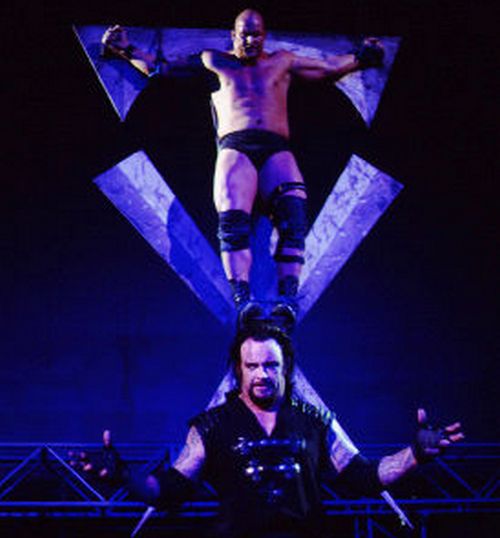
The Lord of Darkness.


6. The Ministry of Darkness Storyline Should Have Remained McMahon Free

 Being an Undertaker fan, I had seriously mixed feelings in late 1998 and early 1999 when they were running the "Ministry of Darkness" storyline. To me, I liked it best, and Taker was AT his best, when he was a lone wolf, an "In-Betweener". Not fully good guy, not fully bad guy, out for himself, but not selfishly so like Steve Austin. He was out for himself, but he was still noble. That was the Undertaker from 1996 (after Paul Bearer turned on him) until about mid-1998. His feud against his "brother" Kane started to change him, however. It brought out the Darkness in him, and he started acting less and less noble, even turning around and joining his evil brother, in a fairly confusing and kind of silly turn of events. A few short months later, he then turned ON Kane, joining back up with Paul Bearer, his old manager, even though Paul had helped Kane make his life a living hell for about a year at this point, and he had previously convinced Kane to help him beat up Bearer! That, folks, is all horrible "creative" from the genius mind of Vince Russo, at least in part. Russo was famous, in the so-called late-90s "Attitude Era", for meandering plotlines that went nowhere, and countless "swerves" that lost all meaning, in an attempt to manufacture Jerry Spring type "shock television".


So, when Taker allied with Paul once more, nonsensically, I didn't care for it. Then when The Acolytes, Farooq and Bradshaw, showed up as his "demonic enforcers", I was confused, but curious. Then he kidnapped and "sacrificed" another former redneck character named Phineas Godwin, transforming him on live TV into the dark servant now called "Mideon". I still wasn't a HUGE fan of what was going on, Taker wrestling less and doing all this weird evil shit, but I was intrigued. Then at Royal Rumble '99 this "Ministry of Darkness" attacked and kidnapped the giant black wrestler formerly known as Mabel. When he next appeared with them, he too was changed, into a monster now known as "Viscera". And shortly after THAT, before Wrestlemania 15 occurred, the Ministry beat up, and "hung" the young gothic stars known as "The Brood" in the middle of the ring. They would later show up, as their normal selves, but now part of Taker's growing Dark Army.


Underwhelming, but it had promise.


Now, to reiterate, I didn't LOVE the whole Ministry thing. But once I started thinking about it, as both a fan, and a creative type myself, I started playing with the idea in my head more. And at least in MY version of how the Ministry could play out, it started to get really interesting. In a sense, the Ministry was an attempt by the WWF to emulate what WCW had been doing for years by this point, with the so-called "New World Order", the NWO, which started with former WWF stars Kevin Nash (Diesel), Scott Hall (Razor Ramon) and Hulk Hogan. They started out as a hated heel group, but quickly became an "edgy" counter-culture to the WCW norm, with fans cheering for the bad guys much as they would come to do in the WWF in the late 90s with characters like Stone Cold Steve Austin and The Rock. For that matter, WWF's own "Degeneration X" was also an attempt to have an NWO-like group, and it was the NWO that pushed WWF to start getting "edgier" with their programming to try and win back audience share.

While the Ministry DID suffer from some stupid moments here and there, all in the interest of that "shock TV", "Attitude Era" crap of the time, to ME, they had potential as a group. If they had handled it correctly, it could have been a solid NWO-like angle, where the Ministry is trying to "take over" the WWF, which is how they initially set out in the first place. Part of the reason they went with having Taker involved in a big stable, apparently, was because he was suffering from multiple nagging injuries, the wear and tear of wrestling getting to his body, and so in the interest of slowing down and wrestling less, but still being heavily involved in the show every week, they decided to go this route. And in theory, it could have worked, long term. The Ministry could have continued growing, as I imagined it would in my own mind, and keep kidnapping and "changing" members into darker versions of themselves. They could do this to both heels AND babyfaces, just to up the stakes, that the Ministry could "take" anybody, if they wished it. They could have even tied it in to the whole "end of the century/end of the world" type fears, making the growing Ministry out to destroy the WWF be parallel to the end of the millennium hysteria. And the army could get big enough, a dozen or more strong, that they were a very real threat to the whole roster, which would force evil Mr. McMahon as well as the heels AND faces on the roster, to band together, even temporarily, in the interest of survival. What they DID, however, was fucking dumb.


"The Higher Power"


The Ministry, as I've said, was flawed, but interesting. Especially when it picked up steam after Wrestlemania 15. Taker faced Mr. McMahon's top stooge, The Big Bossman, in a Hell in a Cell match on that show, and not only defeated, but with the help of his minions, "hung" the Bossman from the cage, in what was one of wrestling's most disturbing and genuinely unsettling moments. He also started coming at McMahon himself, harder and harder. He had his minions "kidnap" his daughter, Stephanie, and tried to force marriage on her in a "Black Wedding" in the middle of the ring, until McMahon's nemesis Stone Cold came out and made the unlikely save. That sounds pretty dumb right? Well just wait.

On the first ever episode of WWF "Smackdown", Taker's Ministry joined with Shane McMahon's (Vince's son) Corporation (formerly also Vince's Corporation), and they became known as the "Corporate Ministry". That, already, was falling off the rails for me, and seemed really dumb, as now members of the Corporation, including Bossman who Taker had tried to hang, were part of his entourage. But the worst part, as you can see above, came when Taker's "Higher Power", whom he had alluded to for weeks, was finally revealed to be none other than...Vince. The guy he had been fighting, the guy whose daughter he kidnapped, etc. For me, that was the last straw. I kept watching, but I stopped caring as soon as they involved Vince in the group. It all basically was played off as some (badly) convoluted ploy to "trick" Steve Austin, as part of McMahon's continuing war against "Stone Cold", which by now had been going on for well over a year, and was really tiresome.

To me, the Ministry COULD have been an interesting, even exciting angle, where Taker builds up this huge army of followers, and comes VERY close to actually either taking over, or destroying, Vince's company. So Vince has to wake up, stop acting like the maniacal boss, and try to rally everyone to fight the Darkness. That could have been pretty cool, if handled right. Unfortunately, A) It's "Attitude Era" WWF, where storylines rarely ever made sense, and B) It's Vince McMahon, who is not exactly known (at least from the 90s onward) for long, building, structured storylines. In the end, as a Taker fan, I was left feeling very disgusted with the direction the whole thing took, and Taker himself eventually kind of just faded out, first teaming with Big Show for awhile, and then leaving TV completely due to another injury. The next time we would see Undertaker, he would be a very human biker, and no longer The Lord of Darkness, or even the "Phenom".


A McMahon in every corner. Joy.


7. Mick Foley Should Have Gotten One Last Big Moment

At Wrestlemania 16 (then referred to as "Wrestlemania 2000"),  it was the first Wrestlemania event of the new millennium, and I suppose as a way to make it seem really special, they decided to have a "Fatal 4 Way" match as the main event. The rest of the card was, surprisingly, mostly tag team or other multi-man matches. And the main event was no exception. I think in part because their top star, "Stone Cold" Steve Austin, was out with injury (not to mention another top star, The Undertaker, also being gone with injuries), that they did this match. Regardless, the buildup on TV, both on Monday Night Raw and the then brand new Thursday Night Smackdown show, was naturally huge. The dastardly Shane McMahon, his "Corporation" group disbanded, was in the corner of the giant Big Show, and his equally dastardly sister Stephanie was in the corner of her (at the time fictional) husband HHH, who was the standing WWF Champion. Vince McMahon, who had for the better part of three years, played the part of the evil boss "Mr. McMahon", was once again at least acting like he was on the side of the angels, since his precious daughter was with HHH and DX, who were running roughshod over the WWF. So in that spirit, McMahon made some kind of "amends" with his former Corporate Champion, The Rock.

And last but not least, there was Mick Foley. The man who originally entered the WWF known as the deranged Mankind, and would later (somewhat nonsensically) bring out his alternate personalities, Dude Love and Cactus Jack (his original wrestling name). But by this point, he was just going by his real name, Mick Foley, in the twilight of his in-ring career. The storyline was now really playing up the fact that his boyhood dream, had been to main event a Wrestlemania, the one thing he had never yet done (having already had short stints as WWF Champion). He had spent previous months feuding with HHH, and prior to Wrestlemania, had faced HHH in a "Hell in the Celll" match, with his career being on the line versus Hunter's title. Needless to say, he lost again, and had to "retire", which as a fan I remember making me legitimately sad at the time. But then lo and behold, the OTHER McMahon, Vince's wife Linda, decided to throw her hat into the mix, and used her corporate power as part owner of the company, to "unretire" Mick, so that he could take part in the Wrestlemania main event, with her in his corner. And thus you had the "big attraction" gimmick of a "McMahon in Every Corner".


Mr. Socko!

Where the blunder this time around comes in, is in the fact that, while yes, this was a "Fatal 4-Way" match, the Big Show wound up being eliminated fairly early in the match by the other three competitors, and while Mick hung around for a bit, ultimately he was also eliminated, and the brunt of the match was the matchup WWF was actually banking on to headline their event: The Rock vs. HHH. Now, mind you, The Rock had gone from being one of the company's top heels, to becoming their most popular wrestler with Austin gone. So him beating HHH for the title would have made sense, both from a storyline and business perspective. But that's not what happened. What happened, in one of the more pointless Wrestlemania booking decisions of all time, is that they had the "mega-heel" HHH retain his title. Granted, a heel closing out a Wrestlemania main event by winning, is not a common occurrence. The "old school" wrestling logic, especially for your biggest show of the year, is "Make sure the fans leave happy", and the easiest way to do that is for the wrestler they like to win in the last match of the night. So for the sheer novelty of it, HHH winning makes a little since, just as a "Surprise" to shake things up and keep fans guessing. However, that doesn't change the fact that out of the possible outcomes for this match, HHH winning had the least amount of impact.

The Rock winning would have made sense because he was "The People's Champion". Big Show winning would have made sense, because then "who is going to beat this giant?" And in either scenario, if you REALLY wanted to keep the evil HHH looking strong, he could have (and likely would have) won the title back in the following months anyway. But to me, the most emotional, meaningful outcome for this match, would have been to let Mick Foley, the perpetual unlikely underdog, who had tried and failed multiple times, even temporarily costing him his career, to beat HHH in prior months. Him coming out on top one last time, letting him be WWF Champ one last time, and then you could have him vacate the belt on Raw the next night, get a tearful standing ovation from the fans, and he could ride off into the sunset. It would have been a really sweet, and memorable moment, all around. And Mick certainly deserved that.


More McMahon drama. Joy.

8. Chris Jericho Should Have Been Booked As a Stronger Undisputed Champ

So in 2001, something both monumental and actually rather depressing took place in the pro wrestling world. Two of the "Big Three" American wrestling promotions, both World Championship Wrestling (WCW) and Extreme Championship Wrestling (ECW), lost their TV deals and essentially folded, for various reasons. While I myself was never a HUGE WCW fan, I did watch it from time to time. At the height the "Monday Night Wars" in the late 90s, because WCW Monday Nitro was actually three hours for awhile, I would sometimes watch part of that first hour before Monday Night Raw came on, and would flip back during commercial breaks to see what was going on. It was never my cup of tea, but WCW did have stars I liked, such as Raven, Billy Kidman, Perry Saturn, Sting (specifically the silent "Crow Sting"), Ultimo Dragon, Rey Mysterio Jr., and Chris Jericho. When Jericho came over to the WWF in late 1999, after a long and mysterious "Y2K" countdown clock appeared on Raw for some time, I was actually excited, because he was a good wrestler, and a fresh face on Raw. Then they proceeded to put him in many questionable or outright dumb feuds and storylines, including being involved with Chyna (who I couldn't' stand).

But later in 2000 and 2001, they started treating him like a serious wrestler, involving him in some really great matches against the likes of Kurt Angle and Chris Benoit. He and Benoit, both Canadians, actually even teamed up for a bit. Well, in 2001, in the aftermath of the WCW and ECW collapses, with the WWF winding up more or less "owning" what was left of both, they decided to do this big "Invasion" angle, where it seemed like a bunch of former WCW stars were trying to take over the WWF. It was actually interesting and exciting at first, but then a handful of ECW stars popped up (including Rob Van Dam, who I instantly liked), and they joined up with the WCW guys, becoming "The Alliance", and from there it just got more and more convoluted, in true Vince fashion. In fact, I honestly could have included that whole period in this list, but I think it might be more appropriate to give it its own article someday. Sufficed to say, from summer 2001 until late November 2001, this "Invasion" story dominated WWF television. And it had its moments, but it was also nice when it was finally over.


King of the World


Now, in 2001, especially during the "Invasion", and with top stars like The Rock and HHH out for different reasons, Jericho actually became a top babyface on the WWF side of things, and they actually treated him like a star for once. I was all about that at the time, because I liked this version of "Y2J". Well, The Rock wound up coming back from Hollywood in time to hog the spotlight and be THE hero during the climax of the whole deal at Survivor Series. And in the midst of that, Jericho became jealous and furious that Rocky was stealing his thunder (and the title he wanted). So in the aftermath, Jericho slid back into being a heel again, because he hated The Rock, and he wanted the gold. Steve Austin, who had switched sides and been the "heel" face of the "Alliance" (in and of itself a stupid move, as one of the WCW stars should have been that), was the standing WWF Champion, and The Rock, upon returning, had won the old WCW World Heavyweight Championship from Booker T. So Vince set up a tournament to unify those titles, as the old WCW belts were being mostly done away with, and the winner of this tournament, would become the first ever "Undisputed Champion".

The final four participants, were the two champions, along with Kurt Angle, and Chris Jericho. In the end, in a move that quite honestly took me by surprise, they actually had Chris Jericho beat BOTH The Rock and Steve Austin all in one night, becoming Undisputed Champ! A fact that you'd better believe Jericho rubbed in everyone's face for months to come. As he should have done, because as the top heel in the company (at the time), and THE champion of the company, the right booking move would have been to push Jericho to the moon, not just having him cheat to win, but having him look like a STRONG, unbeatable champion who is simply that damn good. It would really piss off the fans, in a "love to hate him" type of scenario, because they couldn't boo him being a chicken shit, they'd just have to boo him constantly winning because he's the "King of the World". And then you finally have someone come along and beat him, giving fans that big payoff. Well, that's not what Vince did, of course. Instead, they had Jericho get involved (on a professional level) with Stephanie McMahon, who had been part of the "Alliance" and tried to take down her father's company, now acting as his manager. And because of this, the whole time he was champ, the storyline circulated around her and her dad, and then later her and the returning HHH.

Jericho, and the championship itself, were secondary to the "McMahon-Helmsley" storyline they were telling, which "old school" wrestling wisdom would tell you should NEVER be the case. Chris Jericho should have been made to look as if being THE MAN who beat WWF's two top stars of the "Attitude Era", was important and that being the first ever "Undisputed Champion", the first man to EVER hold both the WWF and WCW belts at the same time, really mattered and was a big deal. Instead, he was made to look like a whiny bitch who only retained his title because Stephanie McMahon helped him cheat. He was overshadowed by his "manager", which defeats the entire purpose of the very IDEA of the wrestling manager (to get the wrestler over). And in the end, his match with HHH at Wrestlemania 18, and subsequent loss of those belts, was anticlimactic and inconsequential, because it had been made to be all about HHH and Steph. As usual.


The Straight Edge Superstar

9. Completely Shitting the Bed with CM Punk's "Pipe Bomb" Momentum

Fast Forward a decade, to 2011. In the 2000s, WWF had several fresh faces come and go, some of whom they legitimately treated (at least for a bit) like top stars and champions, such as Chris Benoit, Eddie Guerrero and Edge, and others they should have done so with but really didn't, like Rob Van Dam, Booker T, The Hurricane, Carlito, and MVP. By 2011, pretty much all of those stars were gone, and in the interim, WWF (now called World Wrestling Entertainment, WWE), entered a period from about 2005 onward, where they got increasingly stale. For most of that time period, after making guys like John Cena, Randy Orton and Dave Batista top stars...that's literally what you got. For the most part, Cena, Orton, and Batista, were champion most of that time, with HHH interjected so he could catch up to Ric Flair, and some rando like Bobby Lashley thrown in once in awhile.


So in 2006, on an ill-conceived "revival" show of ECW (which was short lived because of more, big surprise, bad booking decisions by Vince and Co.), a lesser known indie darling and former Ring of Honor star named CM Punk, was brought up from their farm system into the "big leagues" (on the C show, anyway) of WWE. He was instantly a hit with fans, myself included. For me personally, I liked his "martial arts" persona they originally tried to saddle him with, but I also identified with his real life "Straight Edge" persona, meaning he didn't do drugs, drink alcohol, smoke cigarettes, or engage in promiscuous activity. Not to put too fine a point on it, but that is also pretty much me (I stopped drinking at age 24 back in the mid 2000s, and never really did the other stuff anyway). So I thought he was pretty damn cool, and it helped that he was a really good wrestler to boot. Unfortunately for Punk and his fans, the people in power, including Vince, were not big fans of his, and didn't believe he was "Star Material". The only reason he hung around for the next couple of years, is because those damn fans wouldn't stop cheering for him. In spite of their best efforts to NOT highlight him on their shows, he became one of the most popular stars WWE had. So they eventually had to recognize this, and start treating him better. They did this by having him win the 2008 "Money in the Bank" match at Wrestlemania, which guarantees the winner a shot at the champion of their choice.


What could have been...

Punk went on to cash in, and he was briefly the World Champ (the former "Big Gold Belt" from WCW) on Raw. Unfortunately, Vince and Co. seemed determined to underplay his Champion status, and he eventually lost the belt, being once again relegated to what they call "mid-card" status. Except then they had him win the NEXT year's "Money in the Bank" again, the only guy to do it back to back. So like...what's the dealio, WWE? Punk made it matter more this time, becoming a heel and feuding with popular star Jeff Hardy. In an ironic turn of events, Punk used his real life Straight Edgeness (turned way up to obnoxious levels of course), against what he claimed was Hardy's real life drug problems, and not only took his title but eventually "chased him out of the company". The irony was that short after Jeff left WWE, it turned out he DID actually have drug problems, sadly. Regardless, Punk used this to fuel his Straight Edge fire, making a stable, called "The Straight Edge Society", and pissing fans off by pointing out how they're a bunch of loser addicts, and basically painting himself as some kind of sober messiah figure. Doing this made him essentially the top bad guy in WWE for the next couple of years, though as usual, WWE continued to fail to treat him like he was all that important.

So we get back around to the summer of 2011, and Punk, in real life, is fed up, and with his contract expiring soon, he plans on just walking away from the WWE for good. Because he's leaving anyway and doesn't care, he (obviously with some blessing by McMahon), switches gears and starts going "Real Talk" on WWE and the fans. He comes out and has his infamous "Pipe Bomb" rant, until his mic is cut off, and all of the sudden fans are behind him again, just like that, and he's suddenly the hottest thing in WWE. Again. So he has Vinnie Mac "over a barrel", and since Vince doesn't want to lose this hotness, he gives Punk a new contract, but they do a storyline where he faces John Cena, THE top star of the company, for the WWE Championship. And he wins it, clean, in his hometown of Chicago, and for all the fans know, walks out of the arena, "without a contract", with VINCE'S belt. It was pure gold, and it had the wrestling world talking.

So what do you DO with that kind of major fan excitement and media buzz? Well, you have CM Punk come back and face John Cena again at Summer Slam to determine who is the TRUE WWE Champion of course! And Punk beats Cena AGAIN! The fans go wild, Punk is as popular as ever, and Vince McMahon/Stephanie/HHH hate Punk, because he talked shit about them on live TV, and they don't want him being the face of THEIR company. Sounds like a great setup, right? Sounds like Punk could be the next "Stone Cold", facing off against those evil McMahons, right? Well...no. Punk would eventually, after some roundabout nonsense, go on to have one of the longest WWE Championship reigns in modern history, holding the title for over a year. But you'd barely know it, because most of the main events of their PPV shows during that time, and even many episodes of Raw, were dedicated to a returning Brock Lesnar, or John Cena, or HHH, or a returning Rock.


Rocky, just Go to Sleep.


Now think about that from a logical, business perspective for a minute. You've got CM Punk, THE hottest, most controversial, most talked about pro wrestling star of the last decade+. You make him your champ, and you DON'T push him to the fucking moon. You DON'T put him over big time, making him seem like THE most important and biggest star your company has. He's not on all of your posters, he's not the guy you promote the most as the face of the company. And he's NOT the major focus of your biggest storylines. Instead, you parade a bunch of old washed up wrestlers over him, or John Cena, who fans are tired of, and the man you had Punk beat clean, MULTIPLE times in a row. You'd think that having Punk beat Cena over and over, would be to establish him as the "New Guy", the "Next Big Thing", etc. But apparently not.

In fact, in Vince's infinite wisdom, they broke with tradition (and common sense), and promoted John Cena vs. The Rock as the main event of Wrestlemania a YEAR in advance, not once, but TWICE. For one thing, that is beyond stupid, because traditionally you leave next year's event to be a surprise, not have fans knowing what to expect a year in advance. But to do it TWICE in a row? All the while totally ignoring your most popular star? Beyond idiotic. In fact, Wrestlemania 28 and 29 came and went, and in both instances, CM Punk should have been in the main event, of at least ONE of those shows. As a face, as a heel, WHATEVER. He had done everything possible to earn having that spotlight, and he never got it. Vince took easily the hottest star and angle his show has had in decades, that could have really revitalized interest in WWE, and Punk could have been big for years, and he just ignored him. Even disrespected him, by giving these other stars the spotlight. And eventually, Punk had enough. In 2014, he legitimately walked out for good, after the January Royal Rumble event, never to return, because he was burnt out and sick of how he had been treated.

That "What could have been" picture you saw a ways up there, was CM Punk vs. Daniel Bryan, another indie darling who had by 2014 managed to become a popular star, even though Vince "didn't see him as a star". Punk vs. Bryan at Wrestlemania 30, could have been a great main event, a great match. Or hell, at least turning what they DID do, having a "Triple Threat" match between Randy Orton, Batista, and Bryan, into a 4-Way including Punk. That way, Punk would have gotten the WM Main Event he had wanted and deserved, and we could have gotten a much better match. But, that's not what happened, and Punk left wrestling behind for good, because he had simply had enough.


Just........fuck.

10. The Undertaker NEVER Should Have Lost His Streak

This tenth and final blunder carries more weight than pretty much any of the others, by a country mile, because for me it's personal, and affects me more as a fan. The others were just plain dumb. This one was just plain wrong. As a bit of background, The Undertaker, up until Wrestlemania 18, had never lost a match, though he HAD missed out on Wrestlemania 10 and 16 due to injuries. But this was more of a little known trivia factoid, that got little notice, until he beat Ric Flair at Wrestlemania 18. It was then, after the match, that a heel Undertaker looked at his hands, and counted out 10, indicated that he was 10-0, undefeated at Wrestlemania. The next year, he faced off against both Big Show and A-Train (two giants), and won, further emphasizing his undefeated status. After FINALLY returning as a new incarnation of his "Deadman" persona, leaving the biker gimmick behind at Wrestlemania 20, he defeated his "brother" Kane again, officially making him 12-0. It was at this point, going forward, that his "Streak" suddenly became a thing that was talked about prominently. And every Wrestlemania going forward, it became a big deal every year, as someone tried to end his streak.


They even made a DVD just about the Streak itself.


Now, in the interest of fairness, the Undertaker is my favorite wrestler of all time, and so it's pretty damn cool to have him be the ONLY guy to be not only undefeated at Wrestlemania, but to be so for that long of a duration. And thus AS one of his biggest fans (if I do say so myself), I totally would have loved him to just remain undefeated. However, as much as I would have HATED it at the time, there WAS a time that I would have accepted him losing at Wrestlemania. The caveat being that it was to some young star, back when it really would have mattered. Such as Edge at Wrestlemania 24, that would have put the "Rated R Superstar" over even more than he already was. Or as much as I REALLY would hate it, a young Randy Orton, back when he was still rising up, during his "Legend Killer" phase. I'd HATE if he had beaten Undertaker at Wrestlemania 21, but it would have made sense. It would be lame, but it would have made sense. BUT, considering that those guys didn't beat Taker, once the streak became SO long, I think it honestly got to a point where it, and his career, just went on way too long. Taker was once quoted in an issue of WWE Magazine as saying that he DIDN'T want to be a guy like Ric Flair or Hulk Hogan (he didn't name names, but you knew who he was referring to), old guys that hung on well past their prime. He said he never wanted to hang around so long that he was just a shadow of his old self. Unfortunately, that's exactly what he wound up doing.


I feel ya.


The above image was a snapshot of the crowd right after Taker's match against Brock Lesnar at Wrestlemania 30. There were undoubtedly some dumbass Lesnar marks, who were cheering like crazy (I had to put up with one at the friend's house I watched the PPV at, which made the whole thing worse). But what you see above was representative of most of the massive New Orleans crowd: stunned shock and silence. If you were to ask me, Taker should have stuck to his own words, and hung up those boots long before it got to this point. He should have retired, let's say, after beating Shawn Michaels the second time. Or at the VERY least, he should have retired after going exactly 20-0, making it a nice, even, colossal number. And instead of it being a throw away match against CM Punk (instead of Punk being in the main event where he belonged), what WWE SHOULD have worked out, was bringing Sting on board in time for that match, and giving fans the Sting vs. Undertaker match that everyone had dreamed of for years. Having THAT be his last match, having THAT be 20-0, and then have him ride off into the sunset, his legacy fully intact? That would have been a bad ass moment I, as a fan, would have been proud of.

What happened instead, was what we got. We got Vince McMahon bringing Brock Lesnar back to the WWE, a guy who, by the way, after Vince had made him a top star, a household name and a fuckin' millionaire back in 2002-2004, just walked out on the company that made gave him his "star power". He walked out to try his hand at the NFL, but failed to even make a regular season roster. So then he got into MMA, and eventually became a UFC Champion. Good for him. But the point is, Lesnar is a guy who, by his own admission, was not a wrestling fan growing up, he is not a fan now, and he really doesn't care about the business, OR the fans who make him rich. He is a mercenary who does it for the money and nothing more, and that has always been the case. THAT is the sorry SOB that you allow the singular distinction and HONOR of beating The Undertaker, one of the biggest stars in pro wrestling history, and ending his historic streak? I don't mind telling you, that as a wrestling fan, as a TAKER fan, that made me sick. When Taker lost to Lesnar that day, it legitimately felt like a big piece of my youth died with his streak. That may sound like hyperbole to some, but considering The Undertaker is the character that made me a wrestling fan in the first place, it makes sense.

I must admit, as much as I love and will ALWAYS love Undertaker, and he'll ALWAYS be my favorite wrestler ever...the longer he continued to hang around long past his prime, flying directly in the face of what he himself had said he wouldn't do, the more I started to lose a bit of respect for him. And him agreeing to lose the streak when he did, or worse, even CHOOSING to lose to Lesnar specifically? That just broke my heart, honestly. And then he continued to hang around longer, having MORE WM matches in the following years, even though at that point it literally no longer held any weight or mattered. He had become one of those guys who barely wrestled all year, but then took up a spot and a big payday at the biggest show(s) of the year. I don't know that that is literally how I see how Taker acted in his final years, but sadly it's close enough. And the fact that he (once again chose) to lose to a guy like Roman Reigns as his final match ever? Not AS bad as losing his Streak to Lesnar...but still, as a longtime Taker fan, and someone who doesn't like the phony Reigns, whom WWE has shoved down fans' throats for years even though most don't like him, it just felt wrong.

Taker should have retired long before it ever came to losing to Lesnar. His legacy will always be a great one. But I can't say it's NOT forever tainted and at least SLIGHTLY diminished, by losing the matches he did on his way out. Yes, it is customary for an old star to lose to a young one on their way out, but Taker was a special case. And I'm sure most Taker fans felt the same way I did. He never should have lost his Streak, period.