Showing posts with label Classic Songs. Show all posts

Thursday, May 7, 2026

Classic Songs: The Prophet's Song


It's been some time since I've done one of these, so I feel like it's high time to deep dive into another of my favorite songs. Previously, I've covered the likes of Kansas' "Dust in the Wind", Metallica's  "Unforgiven", and Blue Oyster Cult's "I Love The Night". All three are ballads, in their own fashion, but each are very different songs. For its own part, the song I'm here to talk about today, I'm not even 100% certain that it's my favorite Queen song. At the very least, it has stiff competition from songs I knew and loved for much longer, such as "Seven Seas of Rhye" and "Save Me". But the band Queen is tied very closely to my early childhood. 


Peak 80s Technology


The earliest artists I remember liking as a VERY small child, were 80s pop stars the likes of Michael Jackson and Stevie Wonder, specifically songs like "Bad" and "Part Time Lover". I was also obsessed with Bobby McFerrin's "Don't Worry Be Happy" at one point, as well as The Beach Boys' "I Get Around", which was about the rockin'-est song I'd ever heard when I was little. Around age 4 or 5, I used to listen to my grandmother's Walter Murphy record, which I played a ton on my little Fisher Price Big Bird Phonograph, seen above. I was very specifically mesmerized by his hit song "A Fifth of Beethoven", which is an awesome disco reworking of Beethoven's infamous Fifth Symphony (you know, the one that goes da da da DUNNNNN). For some reason, there was even a period during my Kindergarten year where I REALLY liked George Straits' "All My Exes Live in Texas", even though I had no idea what he was talking about (and I'm pretty sure I thought for years that it was actually by Randy Travis).  


Childhood terror, and wonder.


The back cover art.


It was in that same Kindergarten year, around 1987, that I also started borrowing some of my mother's records as well. I was raised by my grandmother, her own mother, but my mother lived with us on and off again throughout my childhood, until about 1990, at which point she lived with us permanently until my grandmother died from cancer in autumn 1995. The record I listened to the most, was her copy of Queen's "News of the World" album. Their 1977 mega-hit, thrilled me with the songs "We Will Rock You" and "We Are the Champions", but almost more than that, I would just stare and marvel at the album artwork shown above. It is a painting by science fiction artist Frank Kelly Freas, who agreed to alter the original work, to show the four band members being held (and dropped) "dead", by this giant intelligent robot. The inference of the painting, which I'm sure I didn't fully understand at 5/6 years old, is that this giant robot invaded a Queen concert, and grabbed the band with its enormous, harsh metal hands, unintentionally crushing and killing them. One of the cool things about vinyl records, is that they often came packaged with two "folds", one to hold the record, and one that often held a lyrics sheet. And the inner unfolding "gate", often held additional artwork, such as was the case with "News of the World". The inner artwork was just as mesmerizing to me as the front and back covers, as it showed the robot reaching in through the crashed dome ceiling of the concert venue, trying to grab more fleeing concert-goers. 

To little kid me, it was both terrifying and endlessly fascinating. I was horrified by the dead people, and the blood dripping from the robot's fingers. But I also wondered who the dead men were, or the people fleeing in the gate artwork. I also wondered about the robot itself, why it was giant, who built it, why it grabbed the people, and I'm sure on some level I even registered how the painting gave this machine a confused, mournful expression, incapable of truly grasping what it had just done. It was certainly a weird and interesting choice by the band for album art, and it is also certainly one of the most iconic and memorable album covers in popular music history. It was also the only true example of such full blown, elaborate "rock album art" that Queen themselves ever used. 


The ominous inner gate art.


A bit later in my young life, once I had my own cassette tape player, and eventually my own Walkman player, I would borrow some of my mother's tapes as well. The two I remember borrowing the most, were Alan Parson's Project's "Stereotomy" (great obscure album, by the way), and some kind of Queen Greatest Hits collection. That collection rocked, because not only did it have the two hits I loved already in Rock You and Champions, but it had such new treasures as "Bohemian Rhapsody", "Another One Bites The Dust", "Killer Queen", "Bicycle Race", "Somebody to Love", and "Seven Seas of Rhye", among others. Even though I didn't own that Queen tape myself, I surely listened to it a LOT, almost as much as I listened to the few tapes I actually owned myself. Those included such eclectic gems as a collection of California Raisins songs, a collection of Alvin & the Chipmunks songs, two ZZ Top albums ("Afterburner" and the lesser "Recycler"), and the last addition while my grandmother was still alive, Ace of Base's "The Sign". 

I had a very odd, eclectic taste in music as a kid, anyway, partly shaped by what my mother or grandmother had available of their own for me to listen to, but also constrained by what was actually available for me to experience on radio or VH1/MTV, or whatever I was (or wasn't) allowed to listen to. For example, I may have already recounted in a previous article how, upon first buying me my own tape player around age 7, my grandmother took me to the recently opened Walmart in town, and let me pick out a tape to play on it. For whatever reason, I randomly chose Alice Cooper's "Trash", which contained the hit song "Poison". It's odd that she didn't seem to have any previous knowledge of Alice Cooper or his reputation among fearful, pearl-clutching conservative parents. But upon me playing the album in the car, she very shortly took me back to Walmart, to pick out a different record. I was attracted to ZZ Top's "Afterburner" because it had cool cover art of a car flying in space, and she even asked some random young man if that album was "okay for kids", and he said yeah. Funny thing is, while I didn't pick up on any of it at a young age, that album had songs that were lyrically "just as bad" as Cooper's, with such masterpieces as "Sleeping Bag" and "Woke Up With Wood". 

I'm sure if I had been able to experience more heavy metal and such as a child, I would have loved it. I did actually have a brief phase when I first got my Walkman, where I would listen to a local rock and metal station I had discovered, but while I enjoyed some of what I heard, I don't remember any of it REALLY grabbing me, and I eventually shifted to mostly listening to some "Oldies" station, and later a Christian music station. I liked various rock, pop, even rap songs I was able to hear on VH1 or MTV, though my MTV viewing mostly got done between the ages of 10-13, on the sly so I didn't get caught, once I had my own TV in my own room. The majority of what I listened to on my own, though, was my few tapes, oldies and the Christian station, during my pre-teen years. But thanks to my mother, I was exposed to Queen very early in life, and they became an ingrained part of my makeup and consciousness. It's funny, because I clearly remember her mentioning Metallica as a band she liked when I was little, but my grandmother did not want me listening to "music like that" (if she even really knew what Metallica was). My mother had MANY faults and issues, and I didn't always get along with her very well, as a kid or a teen, but outside of her once playing a Meatloaf tape SO often that I destroyed it as an angry, spiteful teen, to her credit she liked some pretty cool bands, and thanks to her, I at least knew some Queen music growing up.   


A classic album, displaying Queen's classic band "emblem".


Unlike the three previous bands whose songs I've covered in this sub-series, Kansas, Metallica and Blue Oyster Cult, who outside of hearing the awesome song "Godzilla" in TNT's Monstervision, and perhaps hearing "Don't Fear the Reaper" in passing at some point, I didn't truly discover and get into until my teens, Queen's music was a part of my life from a much younger age. However, the song I'm here today to talk about, I am fairly certain I didn't actually discover until I was into my 20s. That's due to the fact that I wasn't really able, thanks to the internet, to finally do a deeper dive into Queen's entire catalogue, until then. But regardless of when in life I discovered it, from the very first time I heard "The Prophet's Song", I was hooked. 

This song is similar in tone, heavy use of fantasy style imagery, and just being an epic 1970s prog rock masterpiece, as one of my favorite Kansas songs, "The Pinnacle". another of my favorite songs that I'll have to give its own article someday. Written by Brian May, who is not only my favorite guitarist of all time, but also one of my favorite songwriters, it is arguably the most epic song Queen ever crafted. Yes, even moreso than Bohemian Rhapsody (from the same album). Their early albums featured a wide range of diverse musical sounds, but they definitely dipped their toes into elaborate "prog rock",  most especially with several songs based on Freddie Mercury's own original fantasy ideas. But for this song, Brian May had a dream of a great flood washing everything away, and that served as the main inspiration. Lyrically, it is at least loosely based on the biblical tale of Noah and his Ark, but it is also very dark, and equally features bombastic, fantasy-tinged themes. 


One of many haunting works by the great Gustav Dore.


The song is actually one of a handful of Queen's forays into the "heavy metal" sound, as well, and certainly outside of Black Sabbath, features one of the earliest examples of partial "drop tuning", as May down-tuned his E2 string to D2, apparently to give the song a "moodier" aesthetic. It also happens to be the longest song (with lyrics) that Queen ever wrote, clocking in at nearly eight and a half minutes. It begins (and ends) with a haunting windscape sound, and gentle acoustic guitars, accompanied by Mercury's mournful tones. But then it very quickly escalates into its more present "epic" sound. And then escalates further, to a fairly heavy, riff-driven chorus. You could even rightly say that the verses and choruses rise and fall, like the waves of a great flood. 

 Now, the only flaw in what I would consider an otherwise perfect song, a masterpiece, is an interlude section that starts about three and a half minutes in, which entirely consists of multi-layered vocals, largely repeating the same few lines. On the one hand it gives a trippy, haunting, "calm within the storm" type of effect. But on the other hand, even as much as I adore this song, it admittedly just goes on far too long, for roughly two minutes and fifteen seconds or more. 


Brian May, and his infamous "Red Special" custom guitar.


The reason that Brian May is my overall favorite guitarist of all time, for one thing is because he's an excellent songwriter. Queen songs to his credit include "The Prophet's Song", "Killer Queen", "Keep Yourself Alive", "It's Late", "We Will Rock You", the bittersweet folk ballad "'39" and the amazing Highlander song "Who Wants to Live Forever".  But beyond that, he also has the smoothest, most soulful and beautiful guitar tone I've ever heard. Part of that is due to his famous "Red Special" custom guitar, which his father helped him make, and he played and recorded with almost exclusively. But it was also just his own unique playing style, the way he approached playing lead guitar, with smooth, drawn out notes, almost sounding like classical violin or cello. 

And in a genre of music rife with extraneous, posturing guitar solos that often have nothing at all to do with the rest of the music in their given song, just a guitarist engaging in what I call "musical masturbation", Brian May stood apart. His solos and lead work almost always fit well within the context of the rest of his songs, and they rarely ever sounded like a bunch of wanking noodling, but rather were often full of emotion, melody, and in an odd instrumental way, were almost thoughtful. In fact, one of my other favorite bands, the German metal band Blind Guardian, whose lead guitarist Andre Olbrich is another of my favorite guitarists, his own playing style and lead work was heavily inspired by Brian May and Queen. His solos also more often fit the context of a song, help telling its story instead of just showing off. And his guitar tone and lead work is also very smooth and symphonic. 

Overall, "The Prophet's Song" is in this man's estimation, one of the finest rock epics ever created. Few other songs truly capture such a sense of grandeur and possess such sweeping, awe inspiring mood and imagery. I can only imagine what it must have been like, to be able to hear bands like Queen, Black Sabbath, Led Zeppelin, Blue Oyster Cult, Kansas, and more, back in the 70s when this sound was new, and still forming. When literally no one had heard music like this before. But I will always be eternally grateful for the internet, for among its many faults and idiocies, it continues to serve as a repository for great old entertainment, that in many cases might otherwise eventually be forgotten. And I hope, in writing pieces like this, that I do my part in helping to inspire new generations to seek out and enjoy this music, because it is beautiful, incredible art, and deserves to be heard, forever. 


                                                    *************************


Here are the song's lyrics, and the song itself, so that you may experience its majesty for yourselves. 


Oh, people of the earth,Listen to the warning, the seer he said,"Beware the storm that gathers here".Listen to the wise man.
 
I dreamed I saw on a moonlit stair,Spreading his hand on the multitude there.A man who cried for a love gone stale,And ice-cold hearts of charity bare.
I watched as fear took the old man's gaze,Hopes of the young in troubled graves.
 "I see no day, " I heard him say,"So grey is the face of every mortal".
 
Oh, people of the earth,Listen to the warning, the prophet he said,"For soon the cold of night will fall, summoned by your own hand."
Ah, children of the land,Quicken to the new life, take my hand.Fly and find the new green bough,Return like the white dove.
 
He told of death, as a bone white haze,Taking the lost and the unloved babe.Late too late, all the wretches run,These kings of beasts, now counting their days.
From mother's love, is the son estranged,Married his own, his precious gain.The earth will shake, in two will break,And death all round will be your dowry.
 
Ah, people of the earth,Listen to the warning, the seer he said,"For those who hear and mark my words, listen to the good plan."
And two by two, my human zoo,They'll be running for to come out of the rain.
Flee for your life!
Who heed me not, let all your treasure make you. 
Fear for your life!Deceive you not, the fires of hell will take you,Should death await you.

God give you grace, to purge this place,And peace all around, may be your fortune.
Ah, children of the land,
Love is still the answer, take my hand.The vision fades, a voice I hear,"Listen to the madman".
But still I fear,  and still I dare not.Laugh at the madman...


Friday, July 31, 2020

Classic Songs: I Love The Night

It's time to take another look at one of my favorite songs of all time. Unlike the last two I've done pieces on, which are more personal to me, and I experienced (in both cases) in my teens, this is a song I'm fairly certain I didn't hear until I was at least in early adulthood. So I don't have as much of an emotional connection to it. BUT, it is a song that grew on me over time, to the point that I don't mind saying, not only is it my favorite song by the band who created it, but it's easily in my Top 5 favorite songs of all time, ever.


The 1977 rock classic, Spectres.


Blue Oyster Cult as a band, is an odd duck, to begin with. They are one of the weirdest, and arguably the most eclectic rock bands of their era. For me personally, I encountered them at a younger age in life than I did Kansas and Metallica, the bands who originated the two previous songs in this series. That is, except for briefly seeing Metallica play "Enter Sandman" on some awards show in the early 90s, which for whatever reason at that age didn't yet grab me (though you'd think it would have). 

As I've covered when talking about my childhood experiences with Godzilla, during that glorious TNT's MonsterVision Godzilla marathon, they played a promo in between movies, a video package which played BOC's song "Godzilla" over movie clips. I had never heard that song before, and at about age 11 or 12, I thought it was the most bad ass thing I'd ever heard. So you could easily say that I was instantly a Blue Oyster Cult fan, due to that song, even though I wouldn't experience more of their catalogue until I was into my very late teens. It's entirely probable that I heard at least a clip of their most famous hit, "Don't Fear the Reaper" play on TV at some point. But "Godzilla" was the one that stuck with me.


BOC, in their 70s prime.


For a bit of history, the band that would come to be known as Blue Oyster Cult, started out as a college band called Soft White Underbelly, in the late 1960s. Band friend and rock critic, Sandy Pearlman, offered to be their manager, and also wound up being their creative partner. He was hugely influential in both their music and their success. After going through several name changes, and adding lead vocalist Eric Bloom, they would finally settle on Blue Oyster Cult, and saw their first official self-titled album release in 1972. 

From the start, BOC was a very unique act, both due to the quirky, more intellectual sensibilities of the band members, but also because of their collaborations with various outside personalities. Sandy Pearlman, being probably the biggest of these, contributed several of his own poems over the years, which were used as the basis for certain BOC songs. They would also collaborate lyrically with both rock critic Richard Meltzer, and early Punk Rock icon Patti Smith, among others. Another element of the band that was fairly unique, is that even on their first album, almost every band member sang lead vocals at some point. A tradition that persisted through their entire career, even though Eric Bloom and Donald "Buck Dharma" Roeser have always been the main singers.


BOC's first album, part of their "Black and White era" of the early 70s.


While their early albums, which all featured black and white cover art, featured a few minor hits, such as "Cities On Flame With Rock n Roll" and "Astronomy", and the band saw steady growth through 1975, it wasn't until their 1976 epic "Agents of Fortune" that they finally hit the "big time". Their hit single "Don't Fear The Reaper" reached into the Top 15 on radio airplay, and became an immortal opus for the band ever since. 

They followed this success up with 1977's "Spectres", which produced another massive radio hit, the aforementioned "Godzilla", which also became a permanent favorite for fans at concerts. Buck Dharma, who also happens to be one of my favorite guitarists of all time, not only wrote (and sang) "Don't Fear The Reaper", he also wrote both "Godzilla", and the song I'm actually here to talk about, the low-key ballad "I Love The Night". They would continue churning out hit albums into the early 80s, culminating with what is arguably their overall best record, 1981's "Fire of Unknown Origin". Their success as a top act would wane during the course of the 80s and beyond, but Blue Oyster Cult had already forever etched their name into the proverbial Rock of Ages, as far as rock music was concerned. They had already achieved musical immortality.


From left to right, the three guitarists of BOC, Allen Lanier, Eric Bloom, and Buck Dharma.


The reason that "I Love The Night" has grown over time into one of my favorite songs, is first and foremost because of its incredible tone, and mood. It has just such a chill vibe, with haunting, almost baroque guitar work. Dharma's vocals are equally both peaceful and haunting, as well. It's such a great song to relax to, the perfect thing to put on if you're stressed out, or angry, or otherwise in a foul mood. It has a delicious melancholy to it, even a slight sinister tint, but it also somehow manages to exude such positive, calming vibes.

Lyrically, the song comes off as a very poetic, if not a bit spooky, love song. But underneath, it has supernatural undertones, the "Lady in White" being either some kind of ghost, or perhaps vampire. Regardless, the man in the song becomes mesmerized by a woman who dominates his thoughts, and whom he can only see under the darkness of night. Done perhaps any other way, especially considering the possible vampiric connotations, this is not necessarily the kind of lyrical content that I would gravitate towards, nor even enjoy. But the way Dharma's lyrics, singing, and guitar work intertwine, telling this haunting tale, it just captivates me. It's actually hard for me to believe that this song originally FAILED to be a major radio hit for the band. But for me, while Blue Oyster Cult has produced quite a few truly great songs over their career, this song (perhaps tied with its spiritual twin "Don't Fear The Reaper") is their greatest work.


Here are the lyrics, and the song, so that you may experience, and hopefully be captivated by it yourself:


That night her kiss told me it was over,
I walked out late into the dark.
The misty gloom seems to soak up my sorrow,
The further I went on, I felt a spreading calm.

Then suddenly, my eyes were bathed in light,

And the lovely lady in white was by my side.
She said "Like me I see you're walking alone.
Won't you please stay?"
I couldn't look away.
She said I love the night,
The day is ok and the sun can be fun,
But I live to see those rays slip away.
I love the night,
There's so much I can show and give to you,
If you will welcome me tonight.
If only you had been there my dear,
We could have shared this together.
No mortal was meant to see such wonder,
One look in the mirror told me so.
Come darkness I'll see her again,
Yes I'm gonna go, 'cause now I know...


Friday, June 28, 2019

Classic Songs: The Unforgiven

Almost literally six years ago today, I wrote what accidentally wound up a one-off piece in my collection of article "sub-series" here on Retro Revelations. I typically write about movies, cartoons/animation, or video games the most often. Once in awhile I'll throw out a bit on comics or toys or something like that. But this time, pressed for time and wanting something I could just talk about fairly quickly, I decided to write an article about music. For the record, I had fully intended this to also be an ongoing sub-series, but for whatever reasons over these many years since, I've just never gotten back to it, till today. And ironically enough, it's largely for the same basic reason: I'm pressed for time to get a June article out, and wanted something I could write a "simpler" piece about.

The original "Classic Songs" article, was about what is basically my favorite song of all time, "Dust in the Wind" by the progressive rock band Kansas. That song is a timeless masterpiece, and in my mind one of the very best songs written, in any era, period. The song I'm here today to talk about, I would also personally include in that company, as I also feel that it is one of the best written, most emotionally powerful songs ever made. It just so happens that the band who made it, Metallica, is my favorite band of all time. But it also just so happens, that while I love and adore "Dust in the Wind", the song "The Unforgiven", for me, carries a lot more personal weight and meaning.


A band that would come to mean a whole lot to me in my teens.


For a bit of personal background, as I've mentioned in past articles, my childhood was not an easy one. In point of fact, it was fairly dark and lonely in a lot of ways. When my grandmother passed away when I was nearly 14 years old, in the fall of 1995, I felt at the time, like I was finally "free", meaning that I no longer had to live under her far too often very controlling, and sometimes downright scary proverbial thumb. I was not explicitly glad that she died, by any means. But I was glad that, in my mind, I was finally free to, within the limits of a young teen boy, live how I wanted, without having to walk on eggshells and constantly live up to the demands or expectations of someone else. In that, I was partially right. I certainly was more free from age 14 onward than I had ever been beforehand. And I never quite had to live under anyone's direct, overbearing control again. But that did not, by any stretch of the imagination, mean that my teen years wound up being as fun and fancy free as I naively thought they would be at the time.

Unfortunately for yours truly, while free from my grandmother, and allowed far more autonomy and agency in my young life as a result, my teen years would bring with them brand new flavors of struggle and suffering. As a child, and especially as a pre-teen, I had to deal with abuse, and fear, and psychological warfare, and loneliness, and frustration, and anger, etc. But during those young years, most of that came from one source. As I drifted further into my teens, and more specifically once I started high school in the fall of 1996, as many teens discover, no matter how good and stable their home life may be, the world began to shift for me quite a bit. I spent most of my childhood, and even junior high school, being home-schooled. I voluntarily chose to go to public high school, because I earnestly wanted to give it a try, but also because I wanted to go to the same school as my friend Brandon. I had sugarplum visions dancing in my 14 year old mind, of us super-best-pals having a bunch of classes together, and how totally sweet that was going to be. Not only did that not happen (we had exactly zero classes together), but as I would gradually come to learn the hardest way possible, I honestly should have kept my ass back in home-school.


Such a classic, ominous album cover.


My freshman year was somewhat rough, but manageable. I was merely a somewhat "nerdy" (though I didn't really look the part) social outcast, who didn't have much in the way of in-school friends. Though I did have a couple I had made, in addition to actual friends who didn't go to my school, like Harold. But for one thing, my pal Brandon, who at the time I was very close with, had to move out of state half-way through the year, around Christmas in fact, due to his dad's work. And during the spring semester, while nothing major happened socially at school, my home life started getting worse, and I had my first real drama with a girl I liked. Sufficed to say, the pain and anger that already existed in me from my childhood and pre-teen years, those fires began getting stoked towards the end of my Freshman year of high school. If I had been smarter, I would have chosen to go back to home school after that. But instead, for no especially good reason at all, I decided to stick it out, which I would come to regret immensely.

But one positive that did stick out during that latter part of my Freshman year, was that a school friend let me borrow Metallica's self-titled album "Metallica", otherwise known by fans and music aficionados as "The Black Album" (a play on the 1968 Beatles self-titled "White Album"). I had heard Metallica before, at least their biggest hit "Enter Sandman", and likely a couple of songs from their 1996 album "Load", such as "Until It Sleeps" and "Hero of the Day", on the radio. But I had yet to get super into them, or heavy metal in general. That all rapidly changed when I started listening to "The Black Album", as it instantly became, at the time, my favorite album ever.

To be fair, it's an epic work, with so many truly great songs. But on a more personal level, I felt like in my teen years it became something of a "Bible" to me, especially at age 15/16. So many of the songs really spoke to me, and resonated with me, about my life, about my own feelings and growing darkness within. I found that the fury and anger that a lot of heavy metal music possesses, I could not only relate to, but it also served to (at least temporarily) sooth the fury and anger I felt in myself. Songs like "Sad But True", "Holier Than Thou", "Wherever I May Roam", and even the beautiful ballad "Nothing Else Matters", really affected teenage me. But no song resonated with me more, for all the right AND wrong reasons, for all the most awesome, and most sad reasons, than "The Unforgiven".


"So I Dub Thee Unforgiven"


As for the song itself, while it bears no lyrical connection, both the title and the opening (reversed) horn in the song, are from the 1960 film The Unforgiven, a western which starred Burt Lancaster and Audrey Hepburn. The song also starts out with a haunting, melancholy acoustic riff, that does carry a bit of "western" flavor. But then just when that opening has set the mood, the chorus storms in with a heaviness that absolutely belies the anger, frustration and bitterness that the song's character feels. Lyrically, the song tells the story of an unnamed boy, who is someone constantly being manipulated and controlled and oppressed/suppressed as he grows up. A child who doesn't get to be the person he wants or do the things or live the life he wants to, as he grows into a man.

Even if you 're unfamiliar with the song, knowing what little details I've shared about my own childhood, I'd imagine you can easily see how this song "spoke" to me. In a lot of mostly sad ways, it really felt like the song was telling the story of my own life. A feeling that I'm sure many who have heard it and cherished it over the years have shared. The song's verses are fairly heavy and angry, while the chorus is an alternately light and mournful refrain. James Hetfield, the frontman/singer and main lyricist of Metallica, did this deliberately, as he wanted to make a "ballad" that was against type (many rock/metal ballads, especially Metallica's, had soft verses and a heavy chorus). And on an emotional level, it is super effective, as the shift in tones from the angry verses to the lamenting chorus, really do help tell the song's story.

The story of a man who has struggled his entire life to be who he wants to be, while outside forces constantly try to subdue him and "keep him in line". Ultimately, he grows up to become what sadly far too many children in modern society do: hollow shells of their childhood selves, bitter and burnt out from being told to "grow up" and cast aside their dreams and passions. As an old man, the song's protagonist is too tired to struggle anymore, and he quietly, pitifully gives up and dies. Certainly not happy subject matter, but it wasn't meant to be. And given the progressive nature of the song's story, going from childhood to young adulthood, to middle age and finally old age and death, it is something that people of any age can relate to and identify with, even if for sad, shitty life reasons.


From left to right: Jason Newsted, Kirk Hammett, Lars Ulrich, and James Hetfield.


As a complete entity, "The Unforgiven", to me, is a fairly perfect song. It "fires on all cylinders," so to speak, and it really does hit all the right notes. both literally and figuratively. It has a perfect mix of heaviness and softness. It has an emotional resonance in the smooth marriage of instrumentals and lyrics, that both feels genuine, and is so easy to resonate with. It has a very strong storytelling quality, it's a song with a definitive story to tell, not just a bunch of slapped together lyrics that happen to rhyme. That is, as an aside, something I feel James Hetfield got better and better at as he got older, was being a storyteller with his lyrics. Instrumentally speaking, lead guitarist Kirk Hammett, with the prompting of producer Bob Rock, was pushed to record arguably his best solo for this song. Most of Hammett's solos, and to be perfectly fair, most of ALL rock/metal solos, are more or less just the musician showing off, shredding and noodling their way through something that more often than not, doesn't actually fit the context or story of the song much. But Kirk's solo on "The Unforgiven" is near flawless, in both its execution, but also it fully fits the story and tone of the song, and feels like it actually adds to the song, instead of just being part of it.

Metallica would actually go on to make two "sequel" songs to this. The first, coming two albums later, on 1997's "ReLoad", was "Unforgiven II". Musically it was purposefully this song's opposite, starting with a heavier intro, and then sliding into softer verses, then picking up the heaviness again for the chorus. Lyrically, it was more of a love song, speaking more about the struggles within a relationship, though ultimately being a bit more hopeful than the original song's rather dire story. It even borrowed a few similar lyrical refrains, which I felt was a nice touch. Then many years later, on 2008's "Death Magnetic", they did "Unforgiven III". This song has a similar heavy verse, softer chorus vibe to the original, but it starts out with a very nice symphonic bit, led by melancholy piano. Lyrically, "Unforgiven III" tells more of a metaphorical story, of a man "lost at sea", lost in his own life, always out searching for that elusive "gold", while ignoring the perils and details of his real life. I like both songs a lot, though I like U3 better. In fact it's my favorite song off of "Death Magnetic". But I'll always love the original the most.


Metallica live.


Ultimately, as I foreshadowed, my choice to remain in public high school for my Sophomore year, was a massive and even tragic mistake on my part. My personal home life, and strained relationship with a mother who hadn't raised me, continued to get progressively worse, especially as 1997 turned into 1998. And at school, in some kind of teenage way to reflect my shitty life, and how it made me feel inside, I started wearing mostly all black, and eventually even got a (pretty sweet) London Fog trench coat, and black boots, and started painting my nails black sometimes, etc. In other words, while I was more of a "metal kid", for whatever that's worth, I still made the social mistake of gravitating towards the resident "Goth kids" at school, who I naively thought might be "my people" and would understand me, etc. Not only did that turn out to not really be true, but looking even mildly (and trust me it was mild by comparison) "Goth", wound up earning me a completely undeserved shit-ton of harassment and straight up bullying, on what would become a near-daily basis. I found no peace at school, no peace at home, and often enough even just being out walking in public, or somewhere like downtown or the mall, I would even find myself the victim of harassment purely over my vaguely "Goth" looks. Once someone even threw a full "Big Gulp" cup from 7-11 at me while I was walking somewhere.

It was a really brutal, painful, and difficult time in my young life, being only 16 by then, and even after I made the wise decision to (finally) go back to home school for my Junior year, the rest of my teens were still no picnic. I dealt with a lot of anger and bitterness and loneliness and depression. I was often suicidal, or at least thought quite a lot about dying. And one of the only things that helped me on any meaningful level, not friends, certainly not "family", was music. And more than any other band or artist, Metallica's music helped me quite a lot. It helped me deal with all the bullshit and pain, it gave me some small kind of outlet. It helped me to get by, to survive. And perhaps no song helped me, or certainly spoke to me more, than "The Unforgiven". Not to be too much of a bummer, but I'm sorry to report that even in my now basically late 30s, the song's story still resonates with me far too much. But I am still bound and determined, as I was as a headstrong teenager, to not let the song's final verse and ending, be mine. One of these days, hopefully sooner than later (it's been too long coming), I am hopeful that my life will finally fully diverge from the song's path. But I guess until that day finally comes, as far as "songs that tell my life story", I could do a hell of a lot worse.


                                                                 **************


Whether you've heard the song before or haven't, I'll leave you with the lyrics, and a link to the song itself.


New blood joins this Earth,
And quickly he's subdued.
Through constant pained disgrace,

The young boy learns their rules.
 

With time the child draws in,
This whipping boy done wrong.
Deprived of all his thoughts, 

The young man struggles on and on, he's known.
A vow unto his own, that never from this day,

His will they'll take away.

They dedicate their lives,
To running all of his.
He tries to please them all,
This bitter man he is.

Throughout his life the same,
He's battled constantly.
This fight he cannot win,
A tired man they see no longer cares.
The old man then prepares,

To die regretfully.
That old man there is me.

What I've felt, what I've known,
Never shine through in what I've shown.

Never be, never see,
Won't see what might have been.
 

What I've felt, what I've known,
Never shine through in what I've shown.
Never free, never me,
So I dub thee Unforgiven.

You label me, so I'll label you,
And I dub thee Unforgiven.


Friday, June 28, 2013

Classic Songs: Dust in the Wind

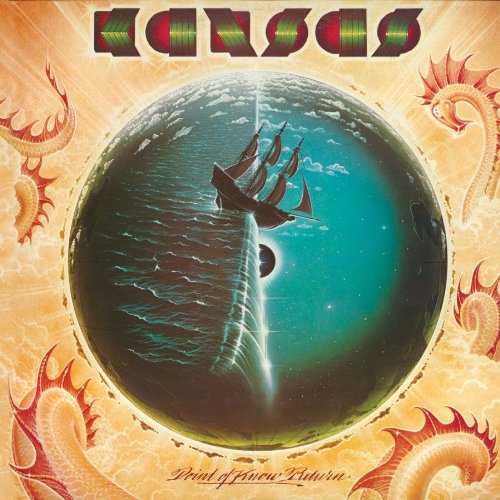
Pressed for time, and feeling like doing something a bit different, today I'm here to talk to you about one of my favorite songs of all time, by one of my favorite bands of all time. The band is Kansas, and the song is "Dust in the Wind". Kansas was, in the 1970s, the heyday of progressive rock, one of the biggest bands in the world, certainly the United States. They have a pretty excellent 70s catalogue all around, but in the mid-70s they put out two chart topping hit albums back to back, 1976s "Leftoverture", and 1977's "Point of Know Return". Both albums together have some of the absolute best songs the band ever put out, in fact some of the absolute best music ever made, in my opinion. But it was on the latter that a last-second edition became one of the most timeless, memorable hits of all time.


One of the single coolest album covers of all time.


Originally written as a finger-picking exercise by guitarist Kerry Livgren, the principle figure behind most of the band's deeper, more esoteric lyrics. His wife had told him he should make a full song out of it, so he wrote the melancholy, philosophical lyrics that are now so well regarded, unsure if his bandmates would accept it. But they accept it they did, and a late, "throw away" addition to the album became the biggest hit the band ever had, even compared to "Carry On Wayward Son". Some bands manage to write that one song that elevates from "hit" to "timeless classic", more of a crossover phenomenon that people not even fans of rock music may hear and recognize. Queen had "We Are the Champions", Led Zeppelin had "Stairway to Heaven", Blue Oyster Cult had "Don't Fear the Reaper", and Kansas had "Dust in the Wind".


Kerry Livgren is on the far left.


The first time I heard this song, it was totally random, at a local bar & grill joint with my great uncle, and I just kind of heard it faintly in the background and it really spoke to me. I'm surprised I hadn't heard it earlier than the age of 15 or so, but this was my first exposure to it. I asked him "Who does this?" and he thought it was "Kansas or somebody", so I later looked them up on the internet, and bam. Instant love. The bittersweet tone of the song is both sad and soothing, the lyrics both simple yet profound. It instantly became one of my absolute favorite songs, and it has remained arguably my favorite song of all time, even though my favorite band of all time is Metallica. It just has the complete package, from the simple guitar melody, to lead singer Steve Walsh's (at the time) perfect vocals, to my favorite band-member Robby Steinhardt's (the majestic looking mountain man in the middle up there) soul-stirring viola solo. The song is short but sweet, and it does all it needs to do in that time. It's just so funny that, much like James Hetfield's "Nothing Else Matters" ballad, this song was something that almost didn't even get recorded, and yet it wound up becoming a timeless, amazing classic.

When I saw Kansas live for the first and only time back in 2006 or so, even though they're all old by now, and my boy Robby was no longer touring with them (for health reasons), when they played this song, it was still an amazing experience, and to borrow an expression from pro wrestling lingo, I totally "marked out". 

I shall leave you with the lyrics, and an awesome video of the song to enjoy. Cheers!


"I close my eyes, only for a moment and the moment's gone.
All my dreams, pass before my eyes, a curiosity.
Dust in the wind.....All they are is dust in the wind.


Same old song, just a drop of water in an endless sea.
All we do, crumbles to the ground though we refuse to see.
Dust in the wind....All we are is dust in the wind.

Now don't hang on, nothing lasts forever but the earth and sky.
It slips away, and all your money won't another minute buy. 

Dust in the wind....all we are is dust in the wind.
Dust in the wind....everything is dust in the wind...."