Thursday, October 31, 2013

Monster Mash: Icons of Horror Cinema Part 3

Well this is it! The final post for Halloween 2013! But never fear, I've saved the best for last....


As mentioned in Part 2 of last year's Icons of Horror, even though I've covered all of the "Big Ones" when it comes to classic horror film actors, from Lon Chaney Sr. and Jr., Bela Lugosi, Boris Karloff, Peter Lorre, Vincent Price, Peter Cushing, Christopher Lee, etc., there are still many more notable actors who absolutely deserve to be mentioned and honored. So without further fanfare, away we go!


Hollywood Royalty


The Barrymore Family - It is slightly cheating, I'll admit, to lump them all in as one entry, but at the same time, it's appropriate and fair. The Barrymore Acting Family started with stage actors Maurice Barrymore and Georgiana Drew, who were fairly well known in the 19th century. Their three children, Lionel, Ethel and John (grandfather of actress Drew Barrymore), would all become stage actors as well, before joining the burgeoning new field of "moving pictures", and all three would go on to become stars of the silent film era. So much so, in fact, that the Barrymore name on a title card often insured a film financial success.

While all three of them mostly acted in more serious (and often prestigious) dramatic roles, they all also featured in at least one horror/thriller type of film, which is why they all make this list. Ethel Barrymore starred in the genre the least, mostly being a dramatic actress. But she did star in the 1946 psychological thriller "The Spiral Staircase", as well appearing in the 1948 fantasy/mystery film "Portrait of Jennie". John Barrymore was slightly more connected to horror, as he starred in the title role in the 1920 silent adaptation of "Dr. Jekyll and Mr. Hyde". It should be noted that there were actually three different films based on Dr. Jekyll released in 1920, one of them a German expressionist film by F.W. Murnau, but Barrymore's version is the most famous and enduring of them. In the sound era, he starred in two different 1931 films, both with a similar premise of hypnotic control, called "Svengali" and "The Mad Genius". He would feature in the genre one final time, in Universal Pictures' 1940 film "The Invisible Woman", though this film was more tongue-in-cheek comedy than horror or science fiction.

Lionel, of course, was the most prolific of the three in this regard, beginning with the 1927 silent film "The Thirteenth Hour". While not a horror picture, he also starred in the 1929 adaptation of "The Mysterious Island", which was originally filmed as a silent picture, but was later adapted with sound and talking sequences right at the dawn of the sound era. He would go on to feature in two prominent and memorable horror films, the 1935 Bela Lugosi feature "Mark of the Vampire" (itself a remake of the lost silent classic "London After Midnight"), and 1936's "The Devil Doll". He would also feature in the many "Dr. Kildare" films, as well as their spinoffs starring his own character "Dr. Gillespie". Late in his career, he would also star in two fantasy films, 1939's "On Borrowed Time", and again as the villain Henry F. Potter in Frank Capra's classic "It's a Wonderful Life". On a final note, as evidenced by the picture above, all three siblings did feature together in one film, 1932's "Rasputin and the Empress".

Notable Roles:

Ethel - Czarina Alexandra in "Rasputin and the Empress" (1932), Mrs. Warren in "The Spiral Staircase" (1946), Miss Spennie in "Portrait of Jennie" (1948)

John - Dr. Jekyll/Mr. Hyde in "Dr. Jekyll and Mr. Hyde" (1920),  Sherlock Holmes in "Sherlock Holmes" (1922), Captain Ahab Ceeley in "Moby Dick" (1930), Svengali in "Svengali" (1931), Vladimar Ivan Tsarakov in "The Mad Genius" (1931), Prince Paul Chegodieff in "Rasputin and the Empress" (1932), Professor Gibbs in "The Invisible Woman" (1940)

Lionel - Professor LeRoy in "The Thirteenth Hour" (1927), Director of "The Unholy Night" (1929), Count Dakkar in "The Mysterious Island" (1929), Grigori Rasputin in "Rasputin and the Empress" (1932), Billy Bones in "Treasure Island" (1934), Dan'l Peggoty in "David Copperfield" (1935), Professor Zelen in "Mark of the Vampire" (1935), Paul Lavond in "The Devil Doll" (1936), Dr. Leonard Barry Gillespie in the "Dr. Kildare" and later "Dr. Gillespie" films (1938-1947), Julian Northrup in "On Borrowed Time" (1939), Henry F. Potter in "It's a Wonderful Life" (1946) 


The eternal gentleman.


Basil Rathbone - Aside from having one of the coolest names of all time, Basil Rathbone also happens to be one of the most well known actors of all time. He is, of course, most famous for portraying the most enduring and popular version of Sherlock Holmes, in a series that lasted 14 films long. There have been many others to portray Mr. Holmes, many of them very good (my personal favorite being Peter Cushing). But Mr. Rathbone is undoubtedly the most popular Holmes, and arguably the best. While many of the Sherlock Holmes films were murder mysteries (in fact most of them were), which does dabble in the "horror/thriller" arena, he also starred in several actual horror films, a perhaps lesser-known fact about him.

The first of which is actually one of his best roles, coming before his Holmes series began, starring in the titular role of the "Son of Frankenstein" in 1938, the last film to feature Boris Karloff as "The Monster". He would star as  the future Richard III in 1939's semi-horror film "Tower of London", which also featured Karloff, as well as a young Vincent Price. He also featured alongside Bela Lugosi in the 1941 film "The Black Cat". In fact, after his run as Holmes was up, his later career would begin to more and more feature him in sci-fi, thriller, fantasy and horror roles. He would re-team once more with now-star Vincent Price in two 60s gothic horror/comedy films, Roger Corman's "Tales of Terror" and Jacques Tourneur's "The Comedy of Terrors". In fact, his last notable film was the rather silly 1967 picture "Hillbillies in a Haunted House", which also featured John Carradine and Lon Chaney Jr.

Notable Roles: Mr. Murdstone in "David Copperfield" (1935), Levasseuer in "Captain Blood" (1935), Sir Guy of Gisbourne in "The Adventures of Robin Hood" (1938), Baron Wolf von Frankenstein in "Son of Frankenstein" (1939), Sherlock Holmes in the "Sherlock Holmes" series (1939-1946), Richard - Duke of Gloucester in "Tower of London" (1939), Dr. George Sebastian in "The Mad Doctor" (1941), Montague Hartley in "The Black Cat" (1941), Narrator/Policeman in "The Wind in the Willows" segment of "The Adventures of Ichabod and Mr. Toad" (1949), Sir Joel Cadman in "The Black Sleep" (1956), The Wizard Lodac in "The Magic Sword" (1962), Carmichael in "Tales of Terror" (1962), John F. Black Esq. in "The Comedy of Terrors" (1964), Professor Hartman in "Voyage to a Prehistoric Planet" (1965), Dr. Farraday in "Queen of Blood" (1966), Reginald Ripper in "The Ghost in the Invisible Bikini" (1966), Gregor in "Hillbillies in a Haunted House" (1967)


One of the most underrated actors of all time.


 Charles Laughton -  A huge star in his time, but sadly far lesser known now, Charles Laughton was a quintessential character actor. He starred in many well known, dramatic roles during his career, but he was also a bit better known for his turns at horror than those listed above. This began in the 1931 classic "The Old Dark House", where he portrayed the affable yet sad Sir William Porterhouse. Next was his role as Dr. Moreau in 1932's "The Island of Lost Souls", in which he featured alongside a heavily made-up Bela Lugosi, of course based on the H.G. Wells novel "The Island of Dr. Moreau". It was in this role that he really established his ability to play a truly imposing, sadistic and chilling villain.

He would go on to star in a rather heroic and empathic effort as Quasimodo in 1939's adaptation of "The Hunchback of Notre Dame". He later had a turn as Sir Simon de Canterville in 1944's "The Canterville Ghost", playing a benevolent but cowardly  spirit. In 1951 he starred alongside Boris Karloff in "The Strange Door", once again playing a sadistic villain. In fact he took a turn in the director's chair in 1955's "The Night of the Hunter", a thriller starring Robert Mitchum. He wasn't most well known for his horror roles, but he was one of those rare actors who was great at whatever role he played, and it just so happened that the horror genre gave him the chance to play some of his most adventurous and memorable characters.

Notable Roles: Sir William Porterhouse in "The Old Dark House" (1931), Dr. Moreau in "The Island of Lost Souls" (1932), King Henry the VIII in "The Private Life of Henry VIII" (1933), Inspector Javert in "Les Misarables" (1935), Captain William Bligh in "Mutiny on the Bounty" (1935), Quasimodo in "The Hunchback of Notre Dame" (1939), Sir Simon de Canterville in "The Canterville Ghost" (1944), Captain William Kidd in "Captain Kidd" (1945), Sire Alain de Maletroit in "The Strange Door" (1951), Captain William Kidd in "Abbott and Costello Meet Captain Kidd" (1952)


The second most famous Frankenstein's Monster.


Glenn Strange - While Boris Karloff "created' the role of Frakenstein's Monster on film, and his is the image most think of when they think of those movies or that character, Mr. Glenn Strange also deserves a bit of credit, for carrying the role to a lot of success in later years. While Lon Chaney Jr. and Bela Lugosi had turns as The Monster in "The Ghost of Frankenstein" and "Frankenstein Meets the Wolf Man", after Karloff had given up the role for health reasons (it had ruined his back), it would be Glenn Strange who would carry the role from 1944 onward. While sitting in a make-up chair for an action film in 1944, infamous make-up artist (and creator of the classic Frankenstein's Monster look) Jack Pierce noticed that Strange had the right kind of face to play the monster, and thus he was cast in "House of Frankenstein", a monster-mash picture also featuring Boris Karloff himself, this time as a mad scientist who wants to carry on Dr. Frankenstein's work.

Karloff actually coached Strange in the role off-camera, thus effectively "passing the torch" to him, and as fate would have it, he starred in the role for three films, the same number that Karloff had played the Monster in. He became so famous in the role himself, that for decades after it was actually his face that toys and other merchandise and art were modeled after. He became known for the role most especially in 1948's "Abbott and Costello Meet Frankenstein", which became a massively popular hit. He played other monsters, and starred in a few other horror films, but ironically, like Karloff before him, he is most well known for his time as "Frankenstein".

Notable Roles: Petro in "The Mad Monster" (1942), Man riding buckboard in "The Mummy's Tomb" (1942), Andy in "The Black Raven" (1943), Giant/Steve in "The Monster Maker" (1944), Frankenstein's Monster in "The House of Frankenstein" (1944), The Monster in "House of Dracula" (1945), Chief Galley Overseer in "Sinbad, The Sailor" (1947), The Monster in "Abbott and Costello Meet Frankenstein" (1948), Atlas the Monster in "Master Minds" (1949)


Stylin' and profilin'.

George Zucco - A man who is arguably going to be the least well-known figure on this list. He starred along-side titans of his era, yet also featured in many films that are today obscure. He was not a "big star" in his day, but what he was, was a great actor, who always brought presence and style to his roles, no matter how ridiculous the plot, or how cheap the budget. But what he also was, was one of the most deserving actors of the title "Icon of Horror Cinema". This son of Britain began his film career as a serious, dramatic actor (as so many horror/sci fi stars often do). His first real brush with a great, but decidedly less serious role, was in the 1936 adaptation of H.G. Wells' "The Man Who Could Work Miracles", where he played a butler to a rather ridiculous and silly British army general. One of his first major, and enduring memorable roles, was opposite Basil Rathbone playing the role of Professor Moriarty, Sherlock Holmes' malevolent arch-nemesis, in 1939's "The Adventures of Sherlock Holmes". A role which, by the way, he knocked out of the park, and it remains arguably his finest work. That same year he featured alongside Bob Hope is a remake of the 1929 horror/comedy hit, "The Cat and The Canary", as well as having a minor role in the Charles Laughton vehicle "The Hunchback of Notre Dame".

It was in the 1940s when Zucco really became firmly established as a star of the horror genre, beginning with his role as the villain Professor Andoheb in 1940's "The Mummy's Hand". Highlights from his prime in the 40s include "Dr. Renault's Secret", "The Mummy's Tomb", "Dead Men Walk", "The Mad Ghoul", "The Mummy's Ghost", and "Fog Island". He also had a smaller role in "House of Frankenstein", sharing billing with the likes of Boris Karloff, Glenn Strange, Lionel Atwill, Lon Chaney Jr. and John Carradine. Ultimately, his film career lasted a solid 20 years, from 1931-1951. His last real horror role was in the 1947 mystery/thriller "Scared to Death", which was ironically also one of Bela Lugosi's last major roles, and Lugosi's only color film. Zucco may not be as well remembered as some of his contemporaries, but that needs to change, because he took even shitty roles and made them stand out, the sign of a great actor.

Notable Roles: Moody the Butler in "The Man Who Could Work Miracles" (1936), Professor Moriarty in "The Adventures of Sherlock Holmes" (1939), Mr. Crosby in "The Cat and The Canary" (1939), Procurator in "The Hunchback of Notre Dame" (1939), Professor Abdoheb in "The Mummy's Hand" (1940), Dr. Perry in "The Monster and The Girl" (1941), Dr. Lorenzo Cameron in "The Mad Monster" (1942), Dr. Robert Renault in "Dr. Renault's Secret" (1942), Abdoheb in "The Mummy's Tomb" (1942), Dr. Lloyd/Dr. Elwyn Clayton in "Dead Men Walk" (1943), Heinrich Hinkel in "Sherlock Holmes in Washington" (1943), Amos Bradfield in "The Black Raven" (1943), Dr. Alfred Morris in "The Mad Ghoul" (1943), Bruno Lampini in "House of Frankenstein" (1944), Nicholas in "Voodoo Man" (1944), Abdoheb in "The Mummy's Ghost" (1944), Leo Grainer in "Fog Island" (1945), Professor Andrew Forbes in "The Flying Serpent" (1946), Dr. Joseph Van Ee in "Scared to Death" (1947), Palanth the High Priest in "Tarzan and the Mermaids" (1948)


Charming, yet devilish. Mr. Milland rocked.


Ray Milland - Born in Wales, though you'd never know it from his many films with spot-on American accents, Mr. Ray Milland was one of a kind. In the same sense that certain actors, like a Boris Karloff, or a Bela Lugosi, or a Vincent Price, or a Christopher Lee, have that unmistakable voice and persona, so did Milland. His first brush with "horror" of any kind, was in the 1934 murder mystery "Charlie Chan in London". After working his way up to leading man status and leading roles, his first turn in a real horror film was as the lead man in Lewis Allen's 1944 classic "The Uninvited". He would again star in a Lewis Allen thriller in 1948's "So Evil My Love". Perhaps his defining role, however, came under Alfred Hitchcock, in his 1954 classic "Dial M for Murder". It was likely this role that got him future parts in the 60s and 70s in often far less classy horror fare.

He worked with Roger Corman in the 60s, in two very decent pictures, "The Premature Burial" (The only one of Corman's official "Poe Series" films not to feature Vincent Price) and "The Man With X-Ray Eyes". In 1962 he also starred in a film that he himself directed, the science fiction film "Panic in the Year Zero!". In the early 70s he played roles in fairly schlocky horror films like "Frogs" and "The Thing With Two Heads" (which saw his white racist character's head attached to a black man's body). The role I remember him best for, and the role that I first saw him in as a child, was as the villain Aristotle Bolt (what a great name) in 1975's adaptation of "Escape to Witch Mountain". A great role, and a fantastic movie that I still love to this day.

Notable Role: Neil Howard in "Charlie Chan in London" (1934), Christopher Powell in "The Jungle Princess" (1936), Roderick Fitzgerald in "The Uninvited" (1944), Stephen Neal in "Ministry of Fear" (1944), Mark Bellis in "So Evil My Love" (1948), Tony Wendice in "Dial M for Murder" (1954), Guy Carrel in "The Premature Burial" (1962), Harry Baldin in "Panic in the Year Zero!" (1962), Dr. James Xavier in "X: The Man With X-Ray Eyes" (1963), Jason Crocket in "Frogs" (1972), Maxwell Kirshner in "The Thing With Two Heads" (1972), Stewart Henderson in "The House in Nightmare Park" (1973), Aristotle Bolt in "Escape to Witch Mountain" (1975), Sire Uri in "Battlestar Gallactica" (1979)


A face not everyone recognizes, a voice few can forget.


Roddy McDowall - Yet another great talent out of the UK, here we have an actor who is very well recognized behind a signature ape mask, with his singularly distinctive voice, yet I have often brought him up in conversation, only to have people say "who?". Very disheartening indeed, considering he is one of my favorite actors of all time, not to mention one of the finest character actors of all time. Again, he is someone not as intimately known in the horror genre because of his lack of iconic roles (no Frankenstein's or Draculas), but nonetheless he did have many great horror roles. His first was a rather minor role in the 1941 Fritz Lang film "Man Hunt". He also featured in a 1948 Orson Wells adaptation of "Macbeth". Throughout much of his earlier career, in fact, he had roles in some pretty huge films, such as John Ford's "How Green Is My Valley", "Cleopatra", "The Greatest Story Ever Told", and "Bedknobs and Broomsticks".

Of course, his most well known role, even though under a mask, is that of Dr. Cornelius from the "Planet of the Apes" films. A role which is deservingly memorable and honored, him starring in all but the second film "Beneath the Planet of the Apes", where he was replaced by a similar (but not the same) sounding actor. Oddly enough, he starred in a straight up horror film the year before that, in 1967's "It", a film about a disgruntled young man who comes in control of an ancient Hebrew Golem, which he sends out to destroy his enemies. It's one of those movies few people know what the hell you're talking about if you mention it, but it is a really underrated classic, and a good, manic role for him as the villain.

He provided the voice of V.I.N.CENT the robot in the 1979 classic "The Black Hole" (probably the darkest film Disney ever produced), and had other memorable voice acting roles later on, such as The Mad Hatter in the 90s Batman animated series. One horror film that more people might recognize him for, and one of his very best roles in my humble estimation, was in 1985's "Fright Night", where he is a horror actor modeled heavily after Peter Cushing in Hammer's "Dracula" films, and he is more or less pushed into trying to fight a real vampire by one of his biggest fans. It's an underrated 80s gem, and in a decade where horror films were progressively more and more all about gore and shock factor, it managed to retain a very classic feel to it (even though the less said about it's unnecessary sequel, the better).

Notable Roles: Ronnie Cavanaugh in "The Pied Piper" (1942), Prince Malcolm in "Macbeth" (1948), Gregory Benson in "That Darn Cat!" (1965), Arthur Pimm in "It" (1967), Cornelius in the "Planet of the Apes" series (1968-1973), Mr. Jelk in "Bedknobs and Broomsticks" (1971), Acres in "The Poseidon Adventure" (1972), Benjamin Franklin Fischer in "The Legend of Hell House" (1973), Mr. Stallwood in "The Cat From Outer Space" (1978), Dr. Mellon in "Laserblast" (1978), White Robe in "Circle of Iron" (1978), Hassan in "The Thief of Baghdad" (1978), V.I.N.CENT in "The Black Hole" (1979), Samwise Gamgee in "The Return of the King" (1980), Father Stone in "The Martian Chronicles" (1980), The March Hare in "Alice in Wonderland" (1985), Peter Vincent in "Fright Night" (1985), Ratty in "The Wind in the Willows" (1987), The Mad Hatter in "Batman: The Animated Series" (1992) and "The New Batman Adventures" (1997)


Those eyes.

Donald Pleasence - I don't think it's any great secret by now that many of the Icons on this list (Parts 1 through 3), are British actors. I'd like to think that is because in the UK film scene, there is more emphasis on looking for people with good classically trained stage backgrounds, IE actually caring about acting skills, than in the US where over the decades it has become more and more about finding pretty looking young people and giving them acting lessons afterwards. Then again in all fairness, a good majority of actors in Hollywood also came from strong stage acting backgrounds as well, up until a certain point in the 70s or 80s, I guess. But I digress.

Donald Pleasence, I think it kind of goes without saying, even if you're unfamiliar with his work, is another of those great British actors. In a similar vein to Basil Rathbone, the name Donald Pleasence kind of just screams "I'm British", in a good way. After getting his start in the fairly new (in the 50s) television medium, he started getting parts in theatrical works. One of his first genre roles was in the now almost entirely unknown 1956 British production of "1984". While not a horror film, it's also notable that he had a significant role in the 1963 classic "The Great Escape". He even featured as Satan himself in "The Greatest Story Ever Told". He really started getting on a role in the late 60s, however, playing Dr. Michaels in "The Fantastic Voyage", and then becoming immortalized (and later parodied by Mike Meyers) as the arch-villain Blofeld in 1967's James Bond film "You Only Live Twice". Ironically, this was the only film in which he played that role, it being filled by other actors in other Bond films, yet he undeniably was the best and most iconic Blofeld there ever was.

He would continue building his resume, including starring in George Lucas' first film "THX 1138", the Amicus horror anthology "From Beyond the Grave", and as Bolt's assistant Mr. Deranian in "Escape to Witch Mountain". But of course, his most famous horror role, came in one of the biggest unexpected hits of all time, John Carpenter's 1977 independent film "Halloween". He would wind up playing the role of Dr. Loomis in 5 of the "Halloween" movies, pretty much cementing him in the mind's of modern horror fans. In fact, his reprisal of the role in 1995's "The Curse of Michal Meyers" was his last film role before he died, and the film is dedicated to his memory.

Notable Roles: R. Parsons in "1984" (1956), John Barsad in "A Tale of Two Cities" (1958), RAF Flight Lieutenant Colin Blythe in "The Great Escape" (1963), Satan in "The Greatest Story Ever Told" (1965), Dr. Michaels in "The Fantastic Voyage" (1966), Ernst Stavro Blofeld in "You Only Live Twice" (1967), SEN 5241 in "THX 1138" (1971), Jim Underwood in "From Beyond the Grave" (1974), Lucas Deranian in "Escape to Witch Mountain" (1975), Baron Danglars in "The Count of Monte Cristo" (1975), Doctor Harmon in "Oh God!" (1977), Dr. Sam Loomis in the "Halloween" series (1978-1995), Dr. Jack Seward in "Draclua" (1979), Mr. President in "Escape From New York" (1981), Priest in "Prince of Darkness" (1987)


The man himself.

  
Akira Takarada - Not necessarily the same brand of "horror icon" that many of these other esteemed gentlemen are, but the fact of the matter is, Japanese actor Akira Takarada starred in more than enough science fiction and monster films to qualify in spades. Besides, he's one of my personal favorites, and I think if you've starred in not one but several Godzilla films, you basically win. One of the hot new young stars of Japanese studio Toho in the mid-50s and throughout the 60s, Mr. Takarada featured in more Godzilla films than just about any other actor, and he had roles in many of their other science fiction fare as well.

I am humbled to point out, that he also has the distinction of being one of only two people on this now three-part list who are still alive, and surprisingly, still acting. The other is (as of 2013) Sir Christopher Lee, still kicking at age 91, and currently featuring in the new Hobbit films. Akira Takarada himself is now 79 years old, still acting in both Japanese television and film, and he is at least heavily rumored to have a cameo role in the upcoming 2014 American "Godzilla" film (which will hopefully be a hell of a lot better than the 1998 film America tried).

By virtue of the fact that pretty much his entire career has been spent in his native Japan, the only film fans who are really going to know who he is, are naturally fans of Japanese films, most especially the sci-fi and kaiju films he is known for. But I am here to help make him known to the world, because the guy rocks, and he had some great roles in some of my favorite Toho films of all time, most especially Astronaut Fuji from my all-time favorite Godzilla film, "Invasion of the Astro Monster" (also known as "Godzilla vs. Monster Zero"). On a somewhat humorous note, he is also strongly connected with Disney films in Japan, as he has done the voice dubbing work for characters like the villain Ratigan from "The Great Mouse Detective" and the evil Jafar in "Aladdin".

Notable Roles: Hideto Ogata in "Gojira/Godzilla" (1954), Takeshi Iijima in "Half Human" (1955), Prince Wakatarashi in "The Birth of Japan" (1959), Takano in "The Last War" (1960), Ichiro Sakai in "Mothra vs. Godzilla" (1964), Astronaut K. Fuji in "Invasion of the Astro Monster" (1965), Yoshimura in "Godzilla vs. The Sea Monster" (1966), Lt. Commander Jiro Nomura in "King Kong Escapes" (1967), Dr. Ken Teshiro in "Latitude Zero" (1969), Joji Minamino in "Godzilla vs. Mothra" (1992), Nataro Daigo in "Godzilla: Final War" (2004)


So there ya go, that is pretty much my list of "Icons of Horror Cinema". This entry wound up being longer than I'd planned on it being, but I "Hulk Smashed" my way through and just got it done. There are, of course, as many of you I'm sure might point out, many other actors who could be considered "Horror Icons", most especially when it comes to more modern horror films. Some of these would be names like Jamie Lee Curtis, Sigourney Weaver, Robert Englund, Kane Hodder, etc. And while I wouldn't dispute them being icons of horror cinema, please understand that this list sticks to the more classic actors and films. Besides, plenty of people have written articles and books and made videos and documentaries galore talking about many of the better known, more modern horror stars. I feel like my part in all of this, as usual, is to help let people know about some of the older, lesser known stars of yesteryear, because they are the ones that deserve to be remembered and recognized, whereas many new stars are already well remembered and very much recognized.

So with that, I will bid you all a very merry Samhain, and a very Happy Halloween! Stay safe out there, and do yourself a favor, make sure to celebrate the occasion by sitting down and watching at least one or two classic sci-fi/monster/horror films. You'll be glad you did, and I'll rest easy knowing I inspired some classic love. Cheers, and Happy Haunting!


Check out Part 1 and Part 2!


Make sure to have yourself a Mad Monster Party!


Friday, October 25, 2013

Childhood Memories: Halloween Specials

Back again with the next entry in the Retro Revelations buildup to Halloween!


When I was a kid, my favorite time of year was (and honestly still is) the last quarter: October, November, and December. With October, it finally started getting cold (not as much as I'd like where I live, but still), the leaves started turning colors, and it capped off with Halloween. November held even colder weather, along with Thanksgiving and my birthday, which, funny story, actually falls on Thanksgiving about every 4 years or so, so I get my own birthday feast in a way. And then of course, December came, and with it, the Christmas season, the tree went up, the lights went on, carols were in the air, specials were on tv, it was just a great time. In some ways, Christmas-time was my favorite time growing up, because it just seemed to happy so my child's perception. I was also equally bummed once Christmas had passed, because after New Year's Eve, everything just went back to normal.

But as much as I loved Christmas, I think it's fair to say I loved Halloween just as much. Not just the candy, which I of course loved to death. It was the magical feeling in the air, I suppose. I think even as a kid I still felt it. The ancient Celts believed that on what they called Samhain, the veil between the world of the living and the spirit world was at it's weakest. It was on the night of what is in the Roman calendar called October 31st, all the way through to the morning of November 1st, they believed that during that time spirits of passed loved ones, as well as entities from the spirit world that weren't so nice, were more or less free to roam our physical plain. And so, they'd paint their faces and dress in grand attire, so as to ward off evil and make themselves recognizable to clan ancestors, and they'd light huge bonfires and break out in song and dance and stories and feasting, all night long. The original "block party", in a way, I guess you could say. And some of that spirit still resonates in modern Halloween, even though it's been dumbed down and commercialized. I always personally loved the monsters and mystery and mysticism surrounding it, the imagery of werewolves and ghosts and ghouls and jack o lanterns and slimy creatures who go bump in the night. To be honest it still entices me as an adult now, it's just a fun atmosphere all around.

And with that in mind, one of the best parts about Halloween time growing up, were the great Halloween specials that used to air on television. I'll only be covering a few here today, some of the earliest ones I remember, but might well write a sequel piece at a later date, covering others. So without further adieu:


"It's the GREAT PUMPKIN!"


It's The Great Pumpkin, Charlie Brown! (1966)

It's usually best to begin at the beginning, so with that in mind, it's probably best to start with what is the first real Halloween cartoon special ever made (to my knowledge). "It's The Great Pumpkin, Charlie Brown" was the third ever animated Charlie Brown cartoon, back when creator Charles M. Schultz was directly involved. It's also quite likely the first Halloween special I remember ever seeing as a small child, as they have played it annually on TV for decades. It originally came out in 1966, and while there were many great Charlie Brown specials, it remains one of the very best. The plot centers around Lucy's little brother Linus, who is under the belief that while most people recognize Santa Claus as the greatest spreader-of-joy, there is another such mystical figure who is criminally unknown: The Great Pumpkin. According to Linus, The Great Pumpkin rises out of a pumpkin patch once every Halloween night, only appearing to the most earnest children, and flies through the air spreading cheer and gifts to all good kids everywhere. Basically Santa, except he's a magic pumpkin. Linus, of course, seems to be the only one who believes in the Pumpkin, and while he gets Charlie Brown's little sister Sally to wait with him for it to arrive, only on account of her big crush on him, the Pumpkin never actually shows. Poor Linus.

I always liked this special as a kid, even though I always hated that the Pumpkin never showed up, and that no one believed Linus. It also used to bother me that poor Charlie, who is such a good and decent guy, always seems to get crapped on. I mean who the hell gives a kid ROCKS for Halloween Trick or Treating? But regardless, this is a timeless classic, and I feel it's something that should be seen by everyone when they're young, kind of like seeing "Rudolf the Rednosed Reindeer" around Christmas time.


Ah....the memories.


Disney's Halloween Treat (1982)

Another of the earliest Halloween-themed specials I remember, this, or another very similar one called "A Disney Halloween" aired just about every year on The Disney Channel (back when it was cool) at least up until the 90s. It's basically a clip show, airing as part of their 80s era program "The Wonderful World of Disney", and it features segments from classic Disney animated movies and theatrical shorts, all of course having spooky or supernatural types of themes. It was hosted by a talking jack o lantern puppet, which of course is always a nice touch. The various clips they would use, were things like the "Night on Bald Mountain" piece from Fantasia (which is still amazing to this day), the "Heffalumps and Woozles" bit from "Winnie the Pooh and the Blustery Day", and the Wizard's Duel between Merlin and Mad Madam Mim from "The Sword in the Stone". Depending on the version (this or "A Disney Halloween"), they would also feature a live-acted version of the Magic Mirror from "Snow White and the Seven Dwarves", who would also introduce a few old Disney shorts like "Pluto's Judgement Day", "Lonesome Ghosts" and "Trick or Treat". They also had the always hilarious Donald short "Donald Duck and the Gorilla", which is one of the best Golden Age shorts Disney ever crafted. There was another Halloween special that used old footage of their cartoon archives in the late 80s, a special edition of their DTV program (an MTV type deal that set real music to footage from their old cartoons), called "Monster Hits", which had music videos of a sort for the old "Monster Mash" song, as well as Michael Jackson's "Thriller", etc.

I'd just like to say, that this is the perfect example of why The Disney Channel was awesome when I was growing up in the 80s and early 90s. Because they actually used to have good programming that wasn't all dumb teen sitcoms, they used to have awesome exclusive tv movies and specials, and actually used to frequently show their old theatrical shorts on television. I was lucky enough to be exposed to a great deal of Disney's classic library growing up thanks to that, and thanks to specials like this. These Disney Halloween shows, and other specials they had on The Disney Channel, were great memories from my childhood.


"I vant to suck your blood! Or.....maybe just disco dance, if that's okay."


The Halloween That Almost Wasn't (aka The Night Dracula Saved the World, 1979)

A made for TV movie that originally aired in 1979, and subsequently was a regular on Halloween on The Disney Channel throughout the 80s, this is an obscure but awesome little special. Live action, unlike most of the more memorable Halloween specials, it's a fairly goofy show that exudes awesome mainly on account of some great monster portrayals by great character actors. The show opens on Dracula (portrayed by Taxi's Alex Rieger, actor Judd Hirsch), who rises from his coffin, only to find Igor (played by character actor Henry Gibson) watching TV. A telecast comes on, claiming that Halloween may be at an end, and it's Dracula's fault. Incensed by such a suggestion, and by the threat to what he calls "His national holiday", Dracula calls a meeting of the world's most famous monsters, to try and save Halloween. This brings many guests to his castle, including Frankenstein's Monster, an Egyptian Mummy, a Hungarian werewolf, a Haitian Zombie named Zabaar the Zombie, and of course a broom-riding Witch (played by actress Mariette Hartley).

Dracula feels that Halloween is losing it's power because the monsters have all become too popular, people think they're "cool" now, and more funny than scary, and he feels they need to be scary again. The Witch, however, feels unappreciated, and tired of people making ugly witch jokes about her, so it turns out she is the one who started the rumor that Halloween was over, because apparently Halloween Night can't start until she rides her broom over the moon, which she says she now refuses to do. The special features a "normal" human family, with two kids who are all excited for Halloween, but sad to hear it might end. They're basically used as an in-between narrative device, as well as an educational one, as the parents tell their kids about the history of Halloween. In the end, while she also presents a list of demands that she expects Dracula to meet, making her more of an equal, it is the two kids who magically show up at the Witch's door, the girl dressed as a witch herself, that convince the Witch how important she is, so she agrees to ride over the moon.

Of course being the late 70s, one of her demands is that Dracula has to take her disco dancing, and so after she rides over the moon, the special ends with all the monsters partying at Dracula's castle, disco style. It sounds hokey, and it is, but it's also the kind of special that you really just don't see on television anymore. Judd Hirsch and James Gibson especially really play up their parts of Dracula and Igor well, with Hirsch producing an especially cheesy (but awesome) Bela Lugosi impression throughout. I loved this as a kid, and still honestly like it. It's just a rare piece of film that you don't see the like of today, and it's a great little 20 minute show to watch (if you can find it on Youtube, etc.), for a family or just by yourself, to get you in that Halloween mood.


How awesome does Garfield look as a pirate, honestly?


Garfield's Halloween Adventure (1985)

A strong candidate for my favorite Halloween special of all time, and just one of my favorite comic/cartoon characters of all time period. This was another of the earliest specials I remember seeing, and one of the best ever made. It needs to be said, first off, that between Garfield and The Real Ghostbusters, voice actor Lorenzo Music was an important part of my childhood. I always loved him as the voice of Garfield, and he was WAY better than Dave Coulier as the voice of Peter Venkman (but that's a story for another day). This, I feel, along with the Garfield Christmas special, are the two best out of the 12 they produced, and I really don't know why they don't still show them on TV. They used to show them every year, and I think they're certainly good enough to deserve that "perennial tv special" status.

Anyway, the crux of this story, naturally revolves around Garfield's love of food. And he loves Halloween for one reason in particular: candy. So he dresses himself and Odie up as pirates (with him fully intending to take Odie's share of candy as well), and off they wander into the spectral night. They do in fact get a hefty ransom of sweets, but Garfield, always wanting more, notices more houses across the river, so he and Odie set out in a rowboat on a quest for twice as much candy. They wind up adrift and float down the river, till they reach an abandoned dock on an old island. They wander into an old house, seeing light in the windows, and attempt to warm themselves by the fire, when they are startled by an old man sitting in a chair. He proceeds to tell them a wondrous tale about pirates and stolen treasure, how he was their cabin-boy 100 years ago, and how they had buried the treasure under the house and agreed to return for it 100 years hence, even if it meant returning from the grave. Which of course it did. As Garfield notices it's almost midnight, he and Odie go to leave, and Garfield stops to ask the old man if he wants to join them, but he's gone. He has stolen their boat, leaving them behind as the ghost pirates arrive to get their gold. Long story short, Garfield and Odie have to make a run for it, diving into the river, where Odie has to save Garfield from drowning. They finally reach safety on the other side, where they find the boat, with their candy untouched. Garfield, having learned his lesson, and thankful for Odie saving him, gives the dog his fair share of the candy.

It's a very entertaining piece, and the "darkest" of all the Garfield cartoons simply by virtue of it's subject matter. If you've never seen it, make an earnest attempt to do so, as I highly recommend this over pretty much any other Halloween special, if you see only one.


And that'll be about it for this entry, but fear not, for next week we count down to Halloween itself!

Thursday, October 10, 2013

Silver Screen Stories: Monster Squad

This Halloween train keeps on rolling! Continuing with last week's "Monster" theme, this week we look at one of the single coolest and most underrated (as well as largely unknown) 80s cult classics there is. 


Seriously, Who Ya Gonna Call?


The 80s was a great decade for a lot of different film genres. There are so many great animated films, comedies, action flicks, martial arts films, science fiction, fantasy, you name it. Straight up horror films had, in my opinion at least for the most part, become a lesser entity than they had been from the 20s-60s. They became more about gore and shock value than about telling good stories and providing genuine chills. There were of course exceptions to the rule, as there almost always are, especially when someone like John Carpenter was concerned. Another such player who didn't get the chance in Hollywood that he deserved, but he absolutely delivered on content, was a man named Fred Dekker. I'm going to write a separate piece about him, his works and his tragically short career at another date. But it bears saying that he was living proof that at least in the entertainment industry, the cream does not always rise to the top, as it deserves to.

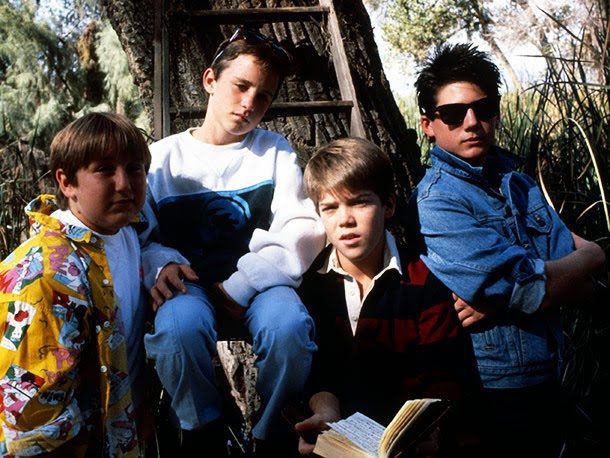
Dekker worked on several projects before Monster Squad, but this film is where he really came into his own and honed his craft. Released in the summer of 1987, two years after the world was gifted with Richard Donner's "The Goonies", Monster Squad has a very similar feel to it. In fact, while certainly not a ripoff, you could honestly describe this movie to people as "The Goonies with monsters in it". The story (which was co-written by Dekker and Shane Black)  focuses around four kids: Sean, monster obsessed pre-teen, Patrick, Sean's skate-boarding best friend, Horace aka "Fat Kid", the awkard nerd of the group, and Rudy, slightly older, black wearing, cigarette-smoking "cool guy". These four fill out the main membership of their own exclusive little club, known as "The Monster Squad", along with it's junior member Eugene (and his dog Pete), as well as eventually Sean's little sister Phoebe. The aim of their group, of course, is to both obsess over monsters, but also to discover whether real monsters exist. And thankfully for the plot, it turns out they do.


Say Cheese! And yes, The Wolfman does indeed have nards.


The main set-up is this: Dracula was somehow being shipped, along with Frankenstein's Monster via airplane, and then arranges to get dumped into the local swamp outside of the small American everytown where the Squad happens to live. Dracula is on a quest to revive the Monster, and gathers around him other monsters, such as a mummy from a local museum, a gill-man from the swamp, and a local tormented werewolf, to aid in his cause. His ultimate goal is to capture this mystic red amulet that is the embodiment of good, but once every hundred years, when good and evil are in balance, it can also become pure evil and give Dracula ultimate power. Dracula also turns three local high-school girls into his three vampiric consorts (referencing the original Dracula tale) to do his bidding. In the prologue to the film, it shows Dr. Abraham Van Helsing and his followers finding Dracula's lair in Europe, 100 years prior, and attempting to use the amulet to open a portal to cast the fiend into Limbo forever. Instead, shit went wrong and Dracula managed to escape, while Van Helsing and many of his followers were sucked into Limbo instead. His remaining followers took the gem and tried to hide it in America, in a mansion that just so happens to be on the outskirts of the Squad's town as well.


The kind of monster you can bring home to mom.


After Dracula successfully revives the Monster, he sets about his plans. But in the meantime, ol' "Frank" has other ideas, as he is not an inherently evil creature, so he escapes and wanders off into town. As you can see above, he is discovered by little Phoebe, who then uses her new friendship with him to gain her own long-sought entry into her brothers' "boys only" monster club. In the interim, Sean's mother, knowing he's obsessed with monsters, finds him (miraculously) a copy of Van Helsing's private notes, which he is thrilled about, until he finds out they are written in German. The Squad decides to take the book to this old man who they all call "Scary German Guy" (because he is old and German and lives alone in a creepy old house), to see if he'll help them decipher it. In spite of them being terrified that "Scary German Guy" will kill them, it turns out he's a sweet, lonely old man who knows a thing or two about monsters, as he is a Holocaust survivor. He can indeed read Van Helsing's notes, and tells the boys about the amulet and how to stop the monsters that are even now invading their little burg.


These kids wrote the book on Cool.


And so, without spoiling too much, that is the plot in a nutshell. It all leads up to an epic showdown, and has a lot of great action-filled (and funny) moments along the way. Dekker showed an adeptness at blending elements of horror, action and comedy in his previous works, and especially so here. I would say, hands down, this film is his masterpiece, and the fact that it went so unrecognized in it's theatrical run is a crime to cinema. But sadly that happens a lot in the film world, so many great movies missing the success they so richly deserved, while often other crappy films see big success. Thankfully, even though I myself never got to see this until I was an adult (yet another awesome thing I missed out on as a child), this movie did find a cult following when it hit home video, and has maintained at least a respectable cult status ever since, even though not nearly enough people know about it to this day.

The film also features some other good roles, such as Leonardo Cimino as "Scary German Guy", Stephen Macht as Detective Del Crenshaw, Sean and Phoebe's father, and Mary Ellen Wright, who plays their mother (she actually had already played the main character's mother in The Goonies as well, and later had a cameo as a mother once again in Ghostbusters 2). It even has an appearance by Jason Hervey, famous for playing Wayne Arnold from "The Wonder Years", who here portrays E.J., the local bully who pesters poor "Fat Kid" Horace. All in all, it is a great film, with a good, well-paced story, likable characters, a great set-up, great special effects for it's budget, and some really snappy dialogue. Again, if this film had been better known, it seriously produced what should have been some of the most memorable film quotes from the 80s. As for the Monsters themselves, they were incredibly well done. Not wanting to directly rip off (and thus get sued) the Universal monsters they're paying homage to, the filmmakers came up with fresh, unique looks and takes (for the most part) on these famous creatures, and some really fantastic character actors bring them to life in truly memorable fashion. If you haven't seen this film, then you really, really need to. Either rent it, or better yet, do what I did and find yourself a copy of the 2 disc special edition, as the second disc has some really awesome behind the scenes stuff, and even a reunion interview with the cast.

Sadly, one of the Monster Squad couldn't be at that interview, as Brent Chalem, who played Horace, passed away at the tender age of 22 in 1997. So not to end on a downer note, but I think I'll end this piece by honoring his memory, and the great job he did in his role, without which the movie wouldn't quite have been the same. He didn't have a major film career (neither did any of the kids really), but he (and they) did make one genuinely great, classic film, and that's more than a lot of actors ever accomplish. So go see it, and find out for yourself! See you next time, and Happy Haunting!


Don't call him "Fat Kid", his name...was Horace. Brent Chalem (1975-1997), RIP.


Thursday, October 3, 2013

Forgotten Gems: Monster Party

Welcome back for our second entry in 2013's Halloween Month! We'll be celebrating Halloween until the actual night itself arrives, so stay tuned here each week as RR keeps this party rolling! And speaking of parties....


When I was a kid, once I had my own NES, I was able to rent a game for it at least once a month or so. At the local All The Best Video where I lived, they had a surprisingly decent game rental selection for a small town, and their NES stock was, I'd wager, at least 100 or more games deep at one point in time. Sufficed to say, from about late 1990 to mid-1995, I rented myself a fair share of games. I may well, over time, have rented over a third, or even close to half, of their NES stock. Every once in awhile we'd rent from a different store, but it was usually All The Best, and so I got well acquainted with their rental section. I was the kind of kid that would check something out just to check it out, and playing game roulette was pretty much like any other form of gambling: sometimes you won big, sometimes to lost hard.

The worst game I ever rented, hands down, was "Defenders of Dynatron City". Now mind you, I rented some really shitty games, games that were barely playable, crappy stories (if there even was one), you name it, but I almost always stuck with them and tried to beat them if I could. I didn't mind if a game was "bad" as a child, I just loved playing video games. But there was one in particular that stuck out as just pure, unadulterated horseshit, and even in my childhood innocence and tolerance, this was one stinker that I just couldn't put up with. It was so bad, I only played it one time after renting it, and only for about an hour before I probably literally said "fuck it" (to myself, quietly of course). Honestly, I might have to do a whole article on that shit-fest someday, as obviously I'm already having flashbacks and going on about it way too much.

But of course, for every stinker I rented, I'd have to say that there were at least two decent games I'd also get, I lucked out in usually having some pretty good taste. A lot of times, all you had to go on to key you off on what you should try, was box art. Box art back in the 8-bit era genuinely was ART, it was typically hand-drawn, some cool image to draw you in. Sometimes the image was a total lie and the game was crap. Other times you lucked out and the image was a preview of how awesome the game was going to be. Every once in awhile, I'd really strike gold, and get a game that, at least to me, was pure awesomeness. One such game was an obscure little nugget by the title of "Monster Party".


Wouldn't box art like this just grab your attention?


Just look at that box art! One quick glance at it should be all you'd really need to see why I was instantly attracted to this game. Hell, if I'd never played this game in my life and saw this cover today, it'd STILL draw me in. To be fair, not all those monsters pictured are actually in the game. I'm not sure there was a Gillman, nor a Yeti/Sasquatch/Whatever that thing is, or Dracula. But that hardly matters, what matters is that the art is freakin' awesome, and seeing it at 10 or 11 years old, I absolutely HAD to play it.

For a bit of background, the game was developed by a group called Human Entertainment, creators of the equally bizarre NES game "Kabuki Quantum Fighter", as well as the Japan-only Fire Pro Wrestling series, and the slightly more well known Clock Tower series which would later appear on the original Playstation. It was published by toy company Bandai, who had a video games division mostly used to promote their properties like Mobile Suit Gundam.  The game originally released in the states in June 1989, but I didn't personally play it until probably around 1992 or so, I'm going to say. As for the game itself, in a nutshell, the story features a young kid named Mark, who is on his way home from a baseball game, when he was suddenly happened upon by a gargoyle of a fellow called Bert. Bert needs his help in ridding his home world of evil monsters who are out of control. Mark says "No thanks", but Bert convinces him it's totally kosher, grabs him, magically fuses with him so they are one being, and away we go to "Dark World".


I still think this is a cool title screen. Just look at it.


One look at the title screen, with its weird but oddly cheery music, that toothy-grinned monster face, and a parade of monsters that pass by the screen if you wait awhile (all of which are bosses later in the game). Just look at that green slime, and even the Jack O'Lantern icon with which you choose "Start" or "Continue". This game right from the get go just kind of screams "Halloween Game!", which is why I'm here talking to you about it now. Catchy music? Check. Cool looking title screen? Check. Jack O'Lantern? Check. Parade of interesting monsters that makes me want to see more? Check. Everything in order to make me super interested in this game, right from the first screen. So you press start and.......


My very first "What the hell?" moment in a video game.


As you can see, this is the very next screen you get after pressing start. I must tell you, as a kid I had never ever seen anything like this in a game before. I was so momentarily shocked to see a dripping blood-filled screen with bloody skeletons, that I'm pretty sure I must've done a double take, and then looked over my shoulder to make sure my grandmother didn't see. Because if she had, it might've been game over before I even got to really play the thing. Deep down inside, I was probably excited (if not also a little scared) by this image, but even though I should have known better, seeing this didn't prepare me for what would come...


Look how deceptively happy Dark World looks....


So the very NEXT screen you get to, is the first level, and you are immediately smacked in the face by an overdose of bright and colorful and cute. I was probably as genuinely surprised by this as I was by the bloody screen before. The music is bright, chirpy and bouncy, there's hot pink in the background, the platform blocks are smiling at you. I mean what's a few flaming ninjas trying to kill you and human legs sticking out of the ground, or a giant killer plant that spits bubbles at you? The gameplay was solid, it seemed fun, and I could get over the weirdness of going from bloody bones to happy faces. What the hell, I was digging this game! And thus I was totally suckered in, just like the game wanted me to be, totally unprepared for what happens when you reach the screen above....


What the $@*#?


So like I said, you get to this huge, weird looking tree with happy faces all over it, which comes at about the stage's half-way point, everything seems normal, hunky dory, no problem. Then you take a few steps from left to right on the screen, and suddenly the game has a flashing lights seizure. When the lights stop flashing, it goes from cute to what you see above. Gooey, gory, grotesque and just....goddamn. Again, as a kid, I had never seen anything like this in a game before, and even that "Round 1" bloody bones screen before had not prepared me for the "GOTCHA" transformation moment this game pulls on you in the middle of the first level. 

It isn't just that bright colors and happy faces are replaced by slime and bloody skulls and melting zombies. The happy, bouncy music also changes, to a slow, dark, brooding (and awesome) piece that really sets the change in tone, even more so than the graphics. Just so you know, this is the only time anything like this happens in the game. The rest of the levels, while all unique and bizarre in their own right, stay what they are the whole time. But then again, to be fair, I've never played any other game where something like this happens. So just for this first level shake-up alone, the game is noteworthy. But that is hardly all.


Yup.


This is one of the "bosses" from the game, in fact the second one you happen upon before the level goes batshit. This one picture pretty much tells everything you need to know about Monster Party. It has a quirky but dark sense of humor that pervades throughout, and an overwhelming (but still cool) cloud of "What the hell?" weirdness that just kind of hangs over everything. The way the game works, is that you play as Mark most of the time, but can change into Bert by getting the occasional "Dr. Mario" looking pill capsule, that will temporarily transform you. Of course, you WANT to play Bert as often as you can, because he's a cool dragon/gargoyle man who can fly and shoot beams from his eyes. Mark is cool too, but I mean, really, he is just a kid with a baseball bat. 

As Mark, you hit things with your bat, or as you quickly learn is better for boss encounters, you hit projectiles that some enemies shoot back at them. As Bert, of course, you flap around and try to shoot them from a distance with your beams. As for those boss encounters, the way this game handles bosses is a bit different from most, as with the exception of the very last boss, there are no real "end of level bosses". Instead, there are rooms scattered throughout the level you can enter. Some have nothing in them, but a few (usually 3-4) in a given level will hold a boss you must defeat. You have to destroy all the bosses in a level to get the key to open a gate at the end and move on. And of course, all of the bosses are very, very strange.


This guy seems harmless, but he's a real asshole.


The "Sorry I'm Dead" monster is more of an in-game joke than a "boss", as it's already dead when you get there, and you get a little question mark power up from it (usually) for doing nothing. But the other bosses in the game, with only one real exception, you actually have to fight. Some aren't so bad. Others, like this Jerk O'Lantern above, can take some real effort (and patience) to beat. He in particular jumps around the room and shoots tiny pumpkins at you in various directions. The bosses in this game vary wildly, and most are weird as hell.


Yes, that is, in point of fact, a fried prawn.


The picture above shows a boss encounter from the second level. The background is a visual homage to the 1980s "The Fly" remake, and the boss itself consists of three different kinds of giant friend Japanese food that you must fight one at a time, as they bounce around the screen trying to kill you. Other bosses include a mummy that throws it's wrapping at you, a giant spider that wants to drink your blood, a zombie rock star with a killer mohawk, a super annoying dragon, the Grim Reaper, and even an adorable kitten that turns evil and throws TINY KITTENS at you, which you have to bat back at it to kill it. Yup.

Another thing about the game's bosses that should be noted, is that each of them says something right before the battle starts, and a lot of the quotes are very off-kilter or even cheesy. For instance, at one point you fight a Sphinx statue that complains it's legs have fallen asleep. There is a giant Samurai ghost who tells you he's a slowpoke, which he is. A minotaur that yells "MOOOOVE IT!" (get it, MOO?), before hurling cows at you.  A giant Pharaoh head that exclaims "Oh boy, Mark soup!". And perhaps the most dastardly of all, a pair of zombies that rise up out of the ground, and tell you to "Watch My Dance". The reason this is dastardly, is because you naturally assume that like all the other bosses, you have to beat the shit out of this boss until it dies. Problem is, you beat it and beat it and beat it, and they just keep getting back up and dancing some more. Quite frustrating. It isn't until you give up in exasperation and just sit there for a minute, that you realize these zombie guys never once attack you. Literally, all they do is dance. And if you watch them dance long enough, their song will end, they'll melt back into the ground, and you get your reward. "Watch My Dance" indeed.


Bert in action, against some dastardly phantoms.


It kind of goes without saying by this juncture that Monster Party is one of the single oddest and most outrageous games ever made. The fact that so few gamers have probably ever heard of it, let alone played it, makes that both better and also worse. Better because it's like this awesome secret that only you and a few others have shared. But also worse because it's a good enough, and weird enough game that you know it's a secret other people NEED to get in on. Any gamer worth their salt, as far as I'm concerned, needs to check this game out. It's hard as hell (especially towards the end). And it's even sadistic at times if you don't know what you're doing (such as with the goddamn haunted house maze level). 

As you can see, you're able from level one to build up a lifebar that stretches the whole length of the screen almost. But the trick is, it's harder than hell to actually KEEP it anywhere near full, and you don't regenerate much health between levels. This game is, in fact (while I kinda hate the phrase), the epitome of "NES hard". But it's still totally worth playing. It puts you through eight stages of hell. But it's a hell that if you're persistent enough, and also a bit lucky enough, you'll maybe get through, and be glad for it.

So in the spirit of Halloween, and in the spirit of just "What the hell?", try to find a way to play this rare gem, and give it a whirl. Or else you might make Bert really sad. And you don't want that. Stay tuned for the next entry in our Halloween celebration! Until next time, Happy Haunting!


Thursday, September 26, 2013

Childhood Memories: Goosebumps

Hey there boys and ghouls! Halloween season is almost upon us, and while Retro Revelations will be celebrating all through October, this year I'm going to get a bit of a jump-start, right now! So consider this your first of many Halloween 2013 inspired articles to come! 

My reading career as a child was perhaps a bit different from many. While I would somewhat give up caring (for various negative reasons) later into my high school years, as a young child I was one of those so-called "smart kids". I was in the "G.A.T.E" Program for many years (Gifted and Talented Education), as well as many other extra-curricular stuff. Part of that sprung from my learning to read pretty well at a young age. I was reading full books on my own by 1st or 2nd grade, and my grandmother encouraged/fostered this, because she was an avid reader herself. At some point around 1990 or so, I would imagine, we started getting Scholastic brand catalogs in the mail, and since my grandmother regularly bought herself books through a science fiction club of some sort, she was thrilled when I took a more active interest in reading, and had no problem ordering me books on a regular basis.

The first thing I really got into, in the long term sense (beyond my childhood obsession with The Hobbit and The Lord of the Rings), was a children's series called "The Boxcar Children". It was somewhat of a kids' mystery series created by Gertrude Chandler Warner, and written by her and later many other authors. I really liked these for a couple of years, as the four Alden siblings featured in the stories got into all sorts of adventures and mystery solving. They were kind of like the Scooby Doo gang, minus a majority of the supernatural elements. But then in what must have been the summer of 1992, my interest in continuing to get Boxcar Children novels ceased as soon as I discovered a new, and far more enthusiastic literary passion: Goosebumps!


The first ever Goosebumps book, published July 1992.


For a little bit of background, the Goosebumps series is (to this day) written by author R.L. Stine. Stine is an author of mostly stories for children and teens, as well as having been a screenwriter for the Nickelodeon show "Eureka's Castle", a very Muppets style children's show that I also happened to love growing up. He first started writing a series for teens entitled "Fear Street" in 1989, before eventually starting the slightly younger skewed Goosebumps novels in 1992. Goosebumps has been, without a doubt, his most resounding success, spawning a TV series, toys, board games, video games, you name it. But enough about that, let's get back to telling you why I loved them so much.

I must've stumbled upon this new treasure in the Scholastic catalog one day, and (as has been well documented here) being the childhood monster nut that I was, I absolutely had to have it. I can't rightly recall now whether the first book I actually read was the first in the series, "Welcome to Dead House" (pictured above), or the second, "Stay Out of the Basement". Either way, for a 10 (nearly 11) year old, having never really read "horror" novels before, it was quite the experience for me. And long story short: I was in love.


Aside from good readin', these books also had some of the best cover art around.


Take a moment, and just look at that cover for "Stay Out of the Basement" pictured above. That picture right there probably sold me on the book, as did most of the covers. That cover especially really does all it needs to, to draw you in and make you want to find out what's going on. You see a monster's hand, but that's it, and that's all you should see. I've seen a later re-printing with a new cover that shows you WAY too much, kind of a "spoilers" cover, and I personally think that's a horrible idea. The point of cover art for a book or a comic or an album, is to stir your imagination, and give you just a hint of what to expect from the actual material itself. And the original Goosebumps covers did that better than anything this side of comic books. Even that cover further above for "Welcome to Dead House", you take one look at that ominous night shot of a creepy house with something in the window, and you immediately say to yourself "alright I gotta know what the hell's going on." Classic stuff, really.

Naturally the stories themselves, at least to me, were also great, and unlike some books, totally lived up to the cover art. The Goosebumps books really started something with me, where with them especially, I would get one and blaze through it right away. Not so much because I didn't want to take my time to read it and really take it in. But because these things were like word crack to me, total page-turners that kept me up well past my bedtime on many a night, staying awake to read "just one more chapter", because I absolutely HAD to find out what happened next! 


Again with the awesome, ominous art that just draws you in.


So while my love affair with these books must've started around the summer of '92, or at the very least late 1992, I kept up with them regularly, and I honestly think I may have had every single one from #1 through at least #30. In fact, I'm pretty sure I had up to #31, "Night of the Living Dummy II", which came out in May 1995. Around this time, my grandmother had lung cancer and was firmly into the throes of chemo-therapy. Either because she was too sick to bother ordering more, or what, I can't really remember anymore, after #31 I didn't really get anymore. I saw some of them on store shelves or whatever once in awhile, and they seemed to get even weirder, with titles like "Revenge of the Lawn Gnomes" and whatnot. For whatever reasons, by summer '95 my love and passion for the books kind of fizzled out, and I more or less lost interest. But let me tell you, for that two or three year stretch, R.L. Stine was churning these things out like a madman, seriously about one per month, and I got them, every single month, #1-31.

The books I did own gave me a lot of great times though. I can't remember them all anymore, but I do have clear memories, say, of reading "Stay Out of the Basement", burning through most if not all of it in one afternoon. Being at the "edge of my seat" (not literally), turning those pages one after the other, just glued to the page. The way that story played out was really gripping, and was for it's time, I think, something very unique that hadn't really been touched upon before. I don't want to spoil it, of course, but let's just say it involved secret experiments and plants and human blood......I mean look at the cover, you can imagine for yourself from there! I surely didn't love each story equally, but none of them were ever dull or uninteresting.


Arguably my favorite book of the series.


The book pictured above is probably the closest candidate I can actively remember for my absolute favorite of the entire series. Why isn't too hard to figure out, but for fun I'll tell you anyway. In the early 90s, I was totally obsessed with several key things: Nintendo, Godzilla, monster/sci-fi/fantasy films in general, Monster in my Pocket figures, a lot of various classical mythology (because of the monsters, duh), Mystery Science Theater 3000, TNT's MonsterVision, and last but hardly least, the Saturday morning X-Men cartoon. Seeing as how I lived with a grandmother who thought comic books were "bullshit" and even tried to tell me once that "anyone other than Jesus who has powers, must get them from the Devil, and therefor they're bad". Right. Moving on, I kinda obviously wasn't really allowed to own comic books (though I did manage to sneak in a nice stash of Fleer trading cards). But because I had a TV in my room from about '91 onward, I WAS able to get away with watching super-hero cartoons, such as Batman, Spider-Man, The Fantastic Four, Iron Man, and most importantly, the one I absolutely loved to death, X-Men.

So, bringing it all the way back around, since I was totally batshit crazy for this cartoon about super-powered mutant people, imagine how I practically shat with glee upon discovering that the next Goosebumps book in line, circa November 1994 (right around my birthday no less), was a story about a kid who was obsessed with COMIC BOOKS, most especially one called "The Masked Mutant" about an evil mutant mastermind who constantly fought with the "League of Good Guys" (real name). "Attack of the Mutant" is an awesome story, but it was especially mind-blowing for my almost-thirteen year old self, reading it fresh and new. The "Masked Mutant" of the title, is a villain with the power to shape-shift into basically any solid form he pleases, be it a snake, a stair-case, or a telephone. Well the kid, named Skipper, finds the Mutant's base in real life, in his home city, and it all goes crazy from there. Not to spoil it too much, but he does wind up getting to fight alongside one of his favorite heroes, the "Galloping Gazelle" (think The Flash with a goofier costume), and it also features one hell of a twist ending.


Again......just look at that fuckin' cover art. I would seriously put that on my wall.


So as I said, from about mid-92 through mid-95, I collected every single one of these books, and while some were better than others, I was almost always entertained, as well as spooked out during the course of the story. Stine, as an author, has a really unique presence that stands out, his storytelling is strong, his ideas are creative, he has a quirky (and dark) sense of humor, and he is able to genuinely chill you with some really evocative imagery. Some of the other standout titles include the likes of "Monster Blood", "Say Cheese and Die!", "Let's Get Invisible!", "Night of the Living Dummy", "The Haunted Mask", and pictured above, "The Werewolf of Fever Swamp". The original run of the series actually carried on for quite awhile after I stopped getting them, in fact it lasted till book #62, "Monster Blood IV", published December 1997.

There's a part of me that wishes that I had kept up with them til the end, as I'm sure there were several gems along the way that I missed out on. Then again, there's a big part of me that wishes I still owned the collection that I did have. As one of many teen-era blunders of mine, I randomly decided one day when I was fourteen to sell (I sure HOPE I didn't give them away) all 31 of my collection to some dumbass friend of my buddy Harold's (M.C. Kids Guy) older sister. Not only was that borderline retarded of me to do, but I'm pretty sure she just turned around and sold them to someone else. I have bought about four of the ones I used to have as a kid, and when I can afford it will likely grab some more (because they're honestly still great reading). But it really sucks that, along with many other things from my childhood, I felt in my teenage stupidity at some point they were someting that I "had" to get rid of. Teens can be really dumb, bottom line.


A clip from the TV show's intro.


My last experience with the Goosebumps brand for many many years, was the television show that came on at some point later in 1995. I don't know if I caught it right when it came out, but what I do remember, at the time, was that I just really wasn't that impressed with it. Having been spoiled by the fantastic kid/teen Nickelodeon show "Are You Afraid of the Dark?" in the early-to-mid-90s, the Goosebumps series, which I was initially excited about upon discovering it, really kind of came off as second rate. And part of that, of course, was caused by the fact that I'd read so many of the books, and your imagination will almost always be better than what they can churn out in a show or movie. It also didn't help that even though the book series was hot enough to even GET a TV show based on it, it just didn't seem to have all that big of a budget. I've gone back and have been watching some of the episodes on Netflix recently, and I've got to say, they're okay. They don't look like SHIT, per say, but I still think the production values, acting, etc., isn't up to snuff with the aforementioned Nick show. One other thing that bothered me about the show upon seeing it, was that for some (if not all) of the episodes, they changed certain things in the story, and while I know "it happens", many of them were just kind of dumb decisions.

One great particular example I can give, perhaps the only episode I might have really watched all the way through, was the one based on book #1, "Welcome to Dead House". SPOILERS, but the ending of the book is incredibly dark and even gruesome for a kids novel. Basically the town this family moves to turns out to be full of "zombies" of a sort, who need fresh human blood to keep on existing, due to some chemical plant accident years ago. The novel ends with most of the family about to be sacrificed in a shaded amphitheater, but then one of the kids who stayed free knocks over a tree (as I remember it), that lets the sunlight in, and the sunlight causes all the zombies to start melting, while the family is able to get away. Well, sufficed to say, they dropped that whole bit from the TV episode, in fact I feel like they changed several things about the story in general, and the ending they came up with was lame by comparison. That alone might have turned me off to really paying attention to the show after that, which ironically enough also ended in 1997, just as the original series did.


He has a little bit of Stephen King to him....except not so creepy.


R.L. Stine has gone on to write many other books, including more than one newer Goosebumps offshoot series. He still churns them out at an amazing pace, even to this day, and while I realize most of his work is just (relatively short) children and teen novels, still, I sincerely wish that I possessed even a fraction of his apparent writer's discipline and productivity. I'm still working on it, but that's a story for another day.

Regardless, he is someone I can honestly say helped, at least to some small extent, shape my childhood, right up there with the likes of  J.R.R. Tolkien, Bruce Coville, Shigeru Miyamoto, Ishiro Honda, Ray Harryhausen, Joel Hodgson and so many others. If you don't know who some of those people are yet, don't worry, keep reading this blog and you eventually will hear about them, probably more than once. But his work had an impact on me, gave me a lot of late-night chills, as well as a hell of a lot of entertainment. There were many things, I'm sorry to say, that were not so great about my childhood. Many things. But I am happy to say that Goosebumps was one of those good things, a happy memory I can look back on, even today. If you've never dabbled, even though they are "kids' books", I would suggest picking up a copy of one of the original series, especially the first 30, because they're honestly really good. And considering October is almost upon us, it's the perfect time to give it a whirl!

Stay tuned for the next in my ongoing Halloween festivities. Happy Haunting!


Edit: I'd like to give a special thanks and shout out to author R.L. Stine, who was turned on to my article on Twitter via one of my followers. He actually wrote me back personally on there and said he thought this was a good piece and that he really enjoyed it. Talk about the kind of thing that makes it all worth it! Certainly one of the coolest things to ever happen to me in my life so far.

If you're on Twitter, please follow him @RL_Stine, because he rocks, and is very fan-friendly.

Thursday, September 19, 2013

Pixelated Dreams: A Tribute to Hiroshi Yamauchi


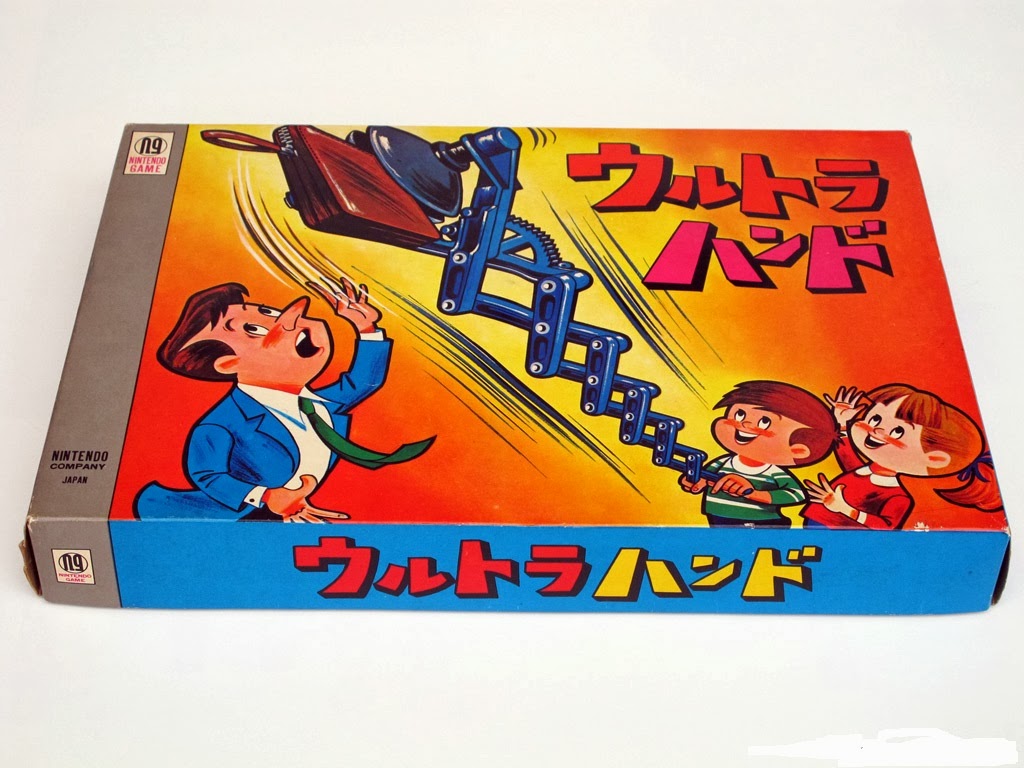
Today, September 19th, 2013, Hiroshi Yamauchi, the long-time president of Nintendo (1949-2002), passed away at the age of 85. Mr. Yamauchi was the third generation head of a little company known as Nintendo. Formed on September 23rd 1889, it was originally, and for many decades afterward, a playing card manufacturer. They specialized in "Hanafuda" cards, which they innovated by adding hand-drawn artwork instead of generic designs, which made them more popular. The company had a unique line of succession as it's head, with the original founder Fusajiro Yamauchi only having daughters, and thus he adopted his son-in-law, Sekiryo, who then took over. Sekiryo also only had daughters, and thus he too adopted his son-in-law with succession in mind, Hiroshi's father, Shikanojo. However, Shikanojo eventually abandoned his wife and son, thus when Sekiryo became ill and wanted to hand his company on, he asked Hiroshi, his grandson, to take over Nintendo instead. He had to leave college to do so, but agreed, even though he would quickly earn a reputation as a hard and domineering boss.

And that is how the now infamous man became head of what would eventually become the most famous video game company on earth, a stint that would last the better part of 53 years. But when he took over in the late 1940s, things were much different, and it was a long road ahead before video games even became a twinkle in someone's eye. In post WWII Japan, which was still recovering in the late 40s,  playing cards were associated with gambling, which was largely illegal, and thus Nintendo's business wasn't great at the time. One of Hiroshi's first acts as company head, was to make a deal with American company Disney, to have family-oriented cards that featured Disney characters on them, a move that both increased their popularity once more, as well as foreshadowing Nintendo's own future "family friendly" image.


Nintendo's first toy, the "Ultra Hand".


Hiroshi tried to diversify Nintendo's business, by branching out into other ventures such as a taxi company, love hotels (places for couples to be alone), and even instant rice. But these ventures ultimately failed, and nearly threw Nintendo into bankruptcy. It wasn't until Mr. Yamauchi one day happened upon company engineer Gunpei Yokoi, a man who would one day be famous for working on such classic products as Metroid, Kid Icarus, and the Game Boy, as he was playing with a small plastic claw he had made to amuse himself during his breaks. Yamauchi was impressed, and ordered Yokoi to make it a commercial product, which eventually became a hot new item for Nintendo, the "Ultra Hand", and thrust them into a new and successful avenue, toy manufacturing. Gunpei Yokoi was at this point made the sole product developer, and his adeptness at electronics led to Nintendo innovating a line of electronic toys, something that at that time in the 1960s and 70s, had not yet become a big market. It was during this period that Nintendo finally began to grow from a small-time company, into a bigger force, and they began to compete firmly with other Japanese toy giants such as Tomy and Bandai.


Nintendo's first video game, the "Color TV Game 6"


With the 1972 release of American company Atari's "Pong", an arcade smash hit, even in Japan, the gradual rise of video games was born. Keen to get into this new venture as well, Nintendo negotiated to become the distributor for the Magnavox Odyssey, the first home video game console, in Japan, in 1974. Mr. Yamauchi saw money in this new kind of entertainment, and thus wanted Nintendo to start making their own game system, which they did, in the form of 1977's "Color TV Game 6", pictured above. There would later be a "Color TV Game 15" as well, the number indicating the number of games built into the device. Much like the Odyssey, Nintendo's own product mostly had primitive versions of Pong, and other similar concepts, but it was still an important step, marking Nintendo's future direction as a company. Their first video game was actually an arcade game, called "EVR Race", which would be followed by several other successful arcade games in the late 70s and early 80s, such as an original, mechanical based light gun arcade version of later NES hit "Hogan's Alley", as well as games like Radar Scope, a space shooter that would see success in Japan, but not America. This would lead into Nintendo's biggest success yet.


Nintendo's first major international arcade hit, Donkey Kong.


Because Radar Scope was not successful in North America, and because Nintendo didn't want to lose money, Yamauchi originally wanted to use the same cabinets to make a new game based on popular American cartoon Popeye the Sailor. Original negotiations fell through however (even though they would eventually make a Popeye game a couple of years later), and so Yamauchi tasked Yokoi and new company artist Shigeru Miyamoto, young and fresh out of college, to design a new game concept to put in these cabinets. Thus Donkey Kong, Miyamoto's first major creation for Nintendo, was born in 1981 (the same year yours truly joined the world). The game's hero, known only as "Jumpman" in 1981, would eventually be renamed Mario, who would star in further arcade hits "Donkey Kong Jr." and "Mario Bros.", and ultimately became the face of the company and the biggest star in video game history. But that's jumping too far ahead.

During this time, other Nintendo game-related products were created, such as the digital watch/game creation "Game & Watch", first introduced in 1980, a product that would continue on until 1991. The Game & Watch was very similar to America's Tiger Electronics games, featuring limited animations on small LCD screens. But it was still a popular product for it's day, in some ways ahead of it's time. But despite the success of things like Donkey Kong and the Game & Watch, Nintendo in the early 80s was still just a smaller player in a market that at that point was dominated by Atari's 2600 home console, as well as it's many imitators. Nintendo wouldn't start becoming the force they are today, until they finally produced their first full home game console in 1983.


Nintendo's crowning achievement, the Famicom, later known as the NES in NA.


In July 1983, after messing with prototype designs, Nintendo released the "Famicom", meaning Family Computer, in Japan. It was their first true home video game console, and was also an instant smash hit. With the Famicom, Nintendo found their "true calling", if you will, and their production of arcade and other types of games decreased as they focused most of their attention on this new hit product. As is now well known (and has been covered by myself already in last year's Happy Birthday NES article), the same year that Nintendo and competitor Sega were having great success, the American home video game market suffered a massive depression due to overcrowding and lack of quality control. The mighty Atari 2600 faltered, it's competitors all but dried up, and Atari itself was in dire straights. Mr. Yamauchi saw this as an opportunity to grab a foothold in a now largely vacated US market, and set Yokoi and co. into redesigning the Famicom into what would be dubbed the "Nintendo Entertainment System", a console that looked a bit more like a toy, and was even marketed with the toy accessory R.O.B. "The Robotic Operating Buddy". Because of clever marketing, as well as a slew of outstanding hits, most especially Shigeru Miyamoto's newest masterpiece "Super Mario Bros.", the NES, released in 1985, became a smash success as well.


Nintendo's next innovation, the handheld Game Boy.


With the success of Miyamoto classics such as Super Mario Bros. and The Legend of Zelda, as well as big third party hits like Mega Man and Castlevania, the NES quickly became the dominant game console, not only in Japan as the Famicom, but throughout much of the world, most especially North America. Yamauchi would later be both hailed and even somewhat reviled for the harsh business tactics he would employ, such as limiting companies to only so many releases on their system per year, and demanding that if a game appeared on the Famicom/NES, that it would not appear for some time on any competing console. But while harsh, these tactics did see the NES enjoy unparalleled success, and Nintendo itself finally grew to become THE giant of the industry. In 1989, their next big product, created by none other than Gunpie Yokoi, was the Nintendo Game Boy. The video game market had beforehand not yet seen a true portable gaming machine on par with the home consoles, with only limited LCD products such as Tiger and the Game & Watch existing. But with the Game Boy, all bets were off, as this was a real, honest to goodness video game console, that you could easily take with you on the go. The screen was limited to "black and white" (or rather, different shades of green), but no one really cared when you had huge hits like Tetris and Super Mario Land to take with you anywhere you went. And thus the true portable video game console market was born. Many competitors would pop up over the years, such as Sega's Game Gear, Atari's Lynx, and even Tiger's own last big gaming attempt, the Game.com, but none of them would have the success of the Game Boy line. Even to this day, Nintendo's portable systems rule the market, even while their home systems fluctuate.


The Japanese version of the Super Nintendo, the Super Famicom.


Nintendo's video games success would continue, as Mr. Yamauchi presided over the release of the Super Famicom/Super Nintendo console, the Nintendo 64 console, the Game Boy Color, the Game Boy Advance, and the Nintendo Gamecube console. Nintendo's success as a company grew to the point that they actually purchased an American pro sports team, the Seattle Mariners baseball team (a landmark in American baseball, as it led to Japanese players being allowed to play in the MLB). The character of Mario became an international icon, growing in popularity and recognition even over the iconic Mickey Mouse, and Nintendo's games in general have had astounding sales success, even while the sales of some of their home consoles have fallen behind the competition at times. Of the Top 50 highest selling video games of all time, well over half of those listed are Nintendo published products, that include the likes of Mario, Zelda, Pokemon, Tetris, and Wii Sports. They have created arguably the most enduring and popular gaming brands in the history of the industry, and it's fair to say that in large part, Mr. Yamauchi "built that".

Hiroshi Yamauchi is largely known to those who follow gaming, as a man who was a strict leader, and an often ruthless businessman. And while all of that and more is true, I think it's fair to point out that he also took care of his employees, and gave men like Yokoi and Miyamoto all the credit for their creations, instead of taking it for himself as some of his contemporaries in the home gaming and computer markets have been known to do. He was not a man concerned with personal accolades, and he obviously didn't care all too much about his public image. He was concerned with the success of his family's company, and that is a part of him that most people don't realize. He apparently was deeply affected by the death of his estranged father, as upon going to his funeral, he met sisters and family that he til that time did not even know he had. He had not spoken to his father at all in his adult life, something that he deeply regretted, and as such he was a man that was committed to his own family, as well as being loyal to his employees. It's also worth noting that, upon fully stepping down from Nintendo to retire in 2005, he refused his entire pension, said to be as much as $14 million US dollars, because he felt the company could put the money to better use than in giving it to him. He also was reportedly responsible for a majority of 7.5 billion yen donated to create a new cancer treatment center in Kyoto, his home.

All in all, he was a complex man, and the details of his private life are sparse, because he was also a private man. But while he was often shrewd or even ruthless in business dealings, what is known is that the man did have a heart in private, and regardless, he deserves to be remembered as a key figure, in some respects the most prominent key figure, in the history of video games. His contributions to gaming speak for themselves, and we as gaming fans owe him much, and should honor his memory always.